
Moving is already complicated enough — figuring out how to get your car to your new home is just one more thing to add to your plate. To do it right, you have to balance between cost, convenience, and peace of mind. Should you drive it? Ship it? Go open or enclosed? And what’s this about a bill of lading?
In this guide, we’ll break down exactly how to transport a vehicle to another state, what it costs, and the practical steps to protect your car (and your budget). By the end, you’ll understand which option fits your move — and what to expect at every stage.
Moving With a Car: Your Options
When planning how to transport your car, there are generally three paths you can go down:
Hire an open carrier
Hire an enclosed carrier
Drive it yourself
Your ultimate decision usually comes down to cost, distance, time constraints, mileage preservation, and the type of protection your vehicle needs. Just as a daily commuter sedan and a vintage sports car won’t require the same solution, neither will every budget.
Below, we’ll walk through each option and the situations where it makes the most sense.
Enclosed automobile transport: For the risk-averse
With enclosed automobile transport, your vehicle is loaded into a fully covered trailer that protects it from weather, debris, and road conditions. This option is commonly used for classic, luxury, exotic, or low-clearance vehicles that need maximum protection. If you’re relocating with an interstate moving company, they can often help coordinate or refer you to a trusted vehicle transport provider.
What it’s best for:
Classic or collector cars
Luxury or exotic vehicles
Low-clearance or custom builds
Prioritizing protection over price
Pros of Enclosed Automobile Transport | Cons of Enclosed Automobile Transport |
|
|
Estimates vary on how much more enclosed transport typically costs than open carrier shipping on cross-country routes, but you can expect to pay between 30 and 60 percent more than open transport.
Open automobile transport: For the budget-conscious
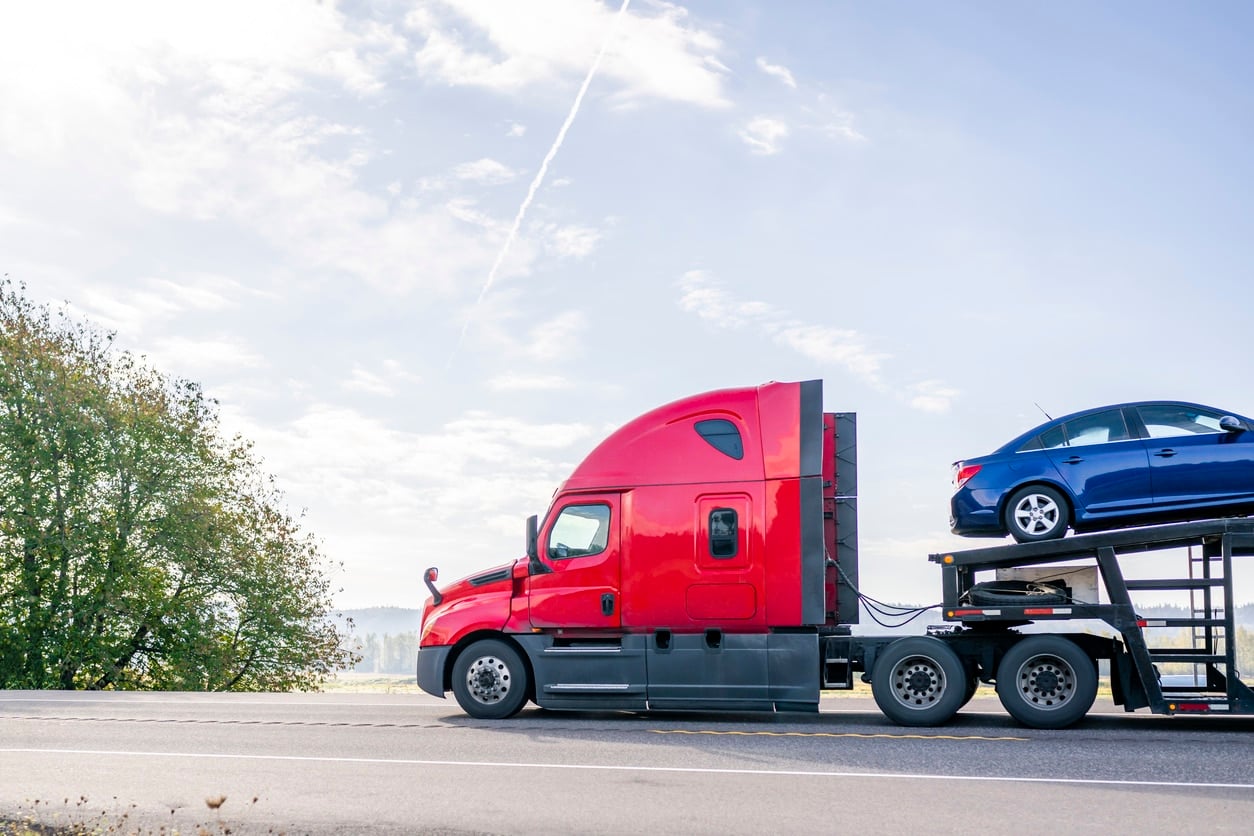
Open transport is the most common and budget-friendly way to transport a vehicle to another state. Your car is loaded onto an open-air trailer, the same type you’ve likely seen hauling vehicles on the highway.
What it’s best for:
Standard sedans and SUVs
Everyday personal vehicles
Budget-conscious moves
Most long-distance relocations, such as moving out of state
Pros of Open Automobile Transport | Cons of Open Automobile Transport |
|
|
For most people researching how to transport a vehicle to another state, open carrier shipping strikes the best balance between cost and convenience.

Driving the car yourself: For the DIY-er
Driving your vehicle to your new destination is the most hands-on option. While you may consider it to be “free,” you’ll need to factor in fuel, lodging, meals, tolls, and time off work. Still, you may find that it's cheaper than your other options — not to mention, road trips are a classic American pastime.
What it’s best for:
Shorter moves
Flexible schedules
Drivers comfortable with adding mileage
Pros of Driving the Car Yourself | Cons of Driving the Car Yourself |
|
|
If you’re relocating cross-country, driving may not save as much money as you think when you calculate moving costs.
How Much Does It Cost To Transport a Vehicle?
It’s (usually) not that expensive to transport your car. While prices for moving services involving a car vary, the biggest factor (besides method of transport) is how far you're going. Here is a rough breakdown of the price per mile for open automobile transport:
500 miles: $1.55–$2.75 per mile
1,000–2,000 miles: $1.20–$1.55 per mile
2,000 miles: $0.45–$0.60 per mile
Enclosed shipping usually costs more per mile because the trailers carry fewer vehicles and provide added protection during transport.
Factors that affect the cost of moving with a car
Here are some of the variables that will ultimately influence the price of transporting your car:
Distance: Lengthier journeys inflate the overall trip cost, but they can offer lower per-mile rates.
Method of transit: Enclosed carriers are more expensive than open ones.
Time of year: Summer (the high-volume moving season) typically means higher prices.
Vehicle type: Larger vehicles take up more space and add weight to the carrier, while cars that can’t be driven may require special equipment to load.
Insurance coverage: Basic carrier insurance is usually included, but higher-value vehicles may require additional coverage, which can increase the total cost.
Direct versus depot shipping: Door-to-door is convenient but can cost more; terminal-to-terminal shipping can be more economical if you don’t mind picking up and dropping off the vehicle.
Pro Tip: Reserve your spot 4–6 weeks in advance to secure more favorable pricing and availability.
How To Transport Your Car
If you’re ready to move forward and prepare your car for transport, here’s the step-by-step process on how to do so efficiently and safely.

1. Get quotes from different companies and compare your options
Collect quotes from at least three different transport companies. Then, compare pricing, transport type, pickup windows, and delivery estimates. Make sure you’re comparing apples to apples when it comes to the type of service as well (open vs. enclosed, door-to-door vs. terminal delivery).
2. Verify the company is insured and reputable
Confirm the carrier has active insurance coverage, read customer reviews online, and verify their registration details. This will ensure the company is legitimate and that you’ll be protected in case of any damage during transport.
3. Choose the right insurance coverage to protect your car
Ask what the transporter’s insurance covers and whether deductibles apply. If your vehicle is on the higher-value end, consider whether supplemental insurance makes sense for added protection.

4. Prepare your car for transport
Preparation reduces the chance of complications during shipping.
Wash the car so that any existing damage is clearly visible.
Remove all personal belongings, as carriers are not liable for personal items left inside.
Photograph and video the car (inside and out) to document its condition before leaving it with the carrier.
Leave about 1/4 tank of fuel, enough for loading and unloading, but not full.
Also, disable any alarms and ensure there’s no fluid leakage before you transport your car.
5. Get the bill of lading before you transport your car
The bill of lading is one of the most important documents in the car transport process. It functions as your official contract, shipping receipt, and condition report all in one. At pickup, the driver will walk around your vehicle with you and note any existing scratches, dents, or cosmetic issues on this form.
Before you sign, take a moment to review it carefully and make sure everything appears correct. If you notice anything missing or incorrect, ask to have it added or fixed. Once you sign, you’re confirming that the documented condition reflects the vehicle’s true condition — so this step protects you if you need to file a claim later.
6. Inspect the car when you receive it
When your car is delivered, don’t rush through the handoff. Before signing the final paperwork, inspect the vehicle in good lighting and compare its condition to the photos and videos you took before shipping.
Look closely for new scratches, dents, or even mechanical issues, and note them directly on the bill of lading. Remember to take photos right away. This creates an official record and is essential for starting an insurance claim. If you sign without noting problems, it becomes much harder to prove the damage happened during transport; take your time and take steps to protect yourself.
FAQs: How To Transport Your Car
What is the average cost of transporting a car?
The cost for cross-country vehicle transport varies significantly based on factors such as the distance, transport type and the size of the vehicle.
For open automobile transport, which is the most common option, prices often follow a per-mile structure. For example, a 500-mile move may cost about $1.55–$2.75 per mile, while longer trips of 1,000–2,000 miles typically drop to about $1.20–$1.55 per mile. Cross-country routes around 2,000 miles or more may fall to roughly $0.45–$0.60 per mile as distance increases. This comes to an average of about $700–$1,500 for many interstate shipments using open carriers, depending on distance and timing.
Enclosed automobile transport, which offers greater protection for luxury or classic vehicles, typically costs about 30–60% more than open transport.
Is it cheaper to drive or ship your car?
Whether or not it’s cheaper to drive or ship your car depends on distance and time. For short moves, driving may cost less. For long-distance relocations, once you factor in fuel, lodging, meals, and added mileage to your car, shipping often makes more financial and practical sense.
Transporting Your Car Can Be Smooth and Simple
Educating yourself on how to transport your car can help you find the best method for your situation and save you time, money, and stress during a move.
If figuring out vehicle shipping on top of everything else feels overwhelming, let the professionals help. Colonial Van Lines has extensive long-distance moving experience with over 250,000 moves nationwide under our belts. Not only does our team handle all the loading, transport, and unloading for you, but we can also coordinate vehicle transportation as part of your relocation.
Get a free quote to get started today!