
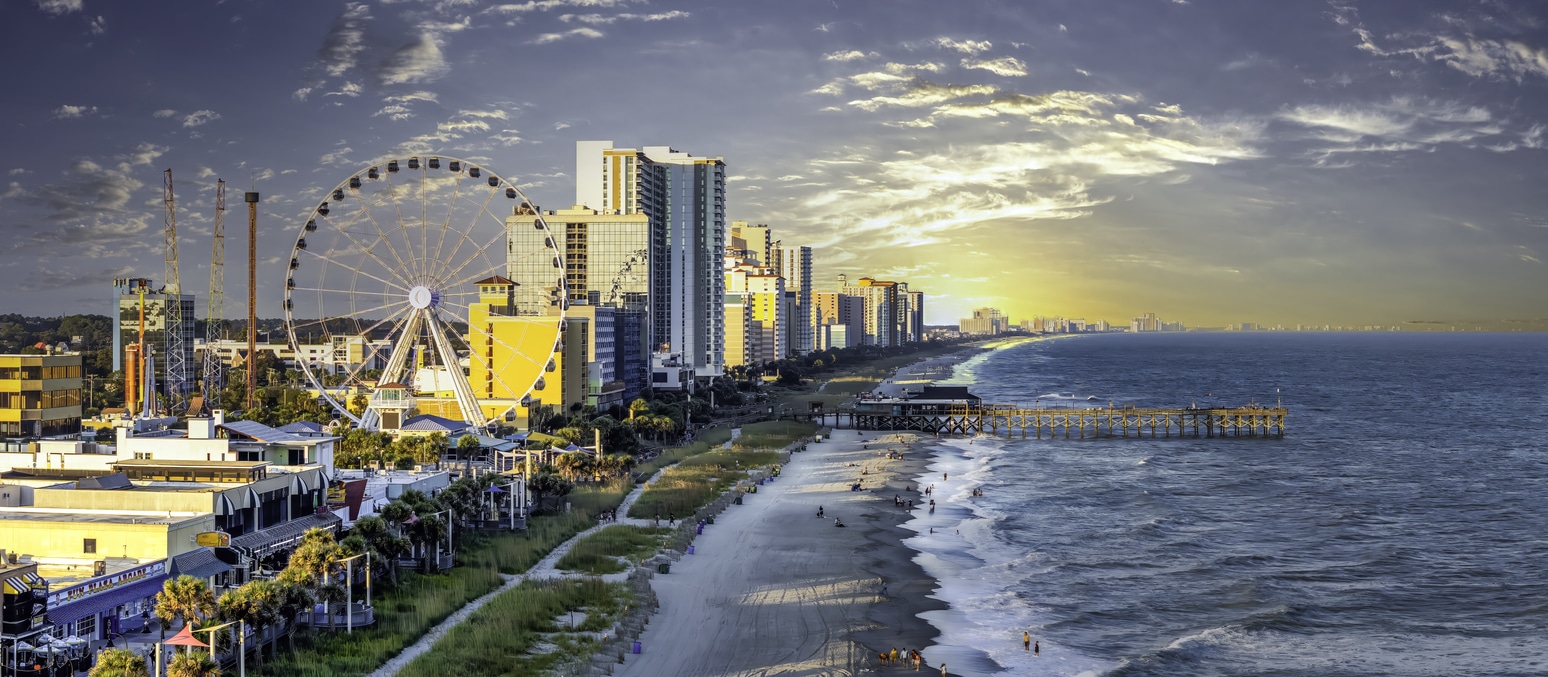
Living in Myrtle Beach puts you in one of the fastest-growing areas in the United States. More than 42,000 people call the city home today, and there are new arrivals in Myrtle Beach every year, drawn by warm weather, affordable housing, and the endless pull of the ocean.
But that doesn’t mean it’s all sunshine. The pros and cons of living in Myrtle Beach are clear. Summers are hot and humid, and hurricane season is a fact of life. Crime rates are also higher than the national average, especially in certain neighborhoods. But many folks decide the trade-offs are worth it for the lower cost of living and a lifestyle centered around sand and surf.
Whether you’re coming from within the state or moving out of state, this is what you need to know before moving to Myrtle Beach.
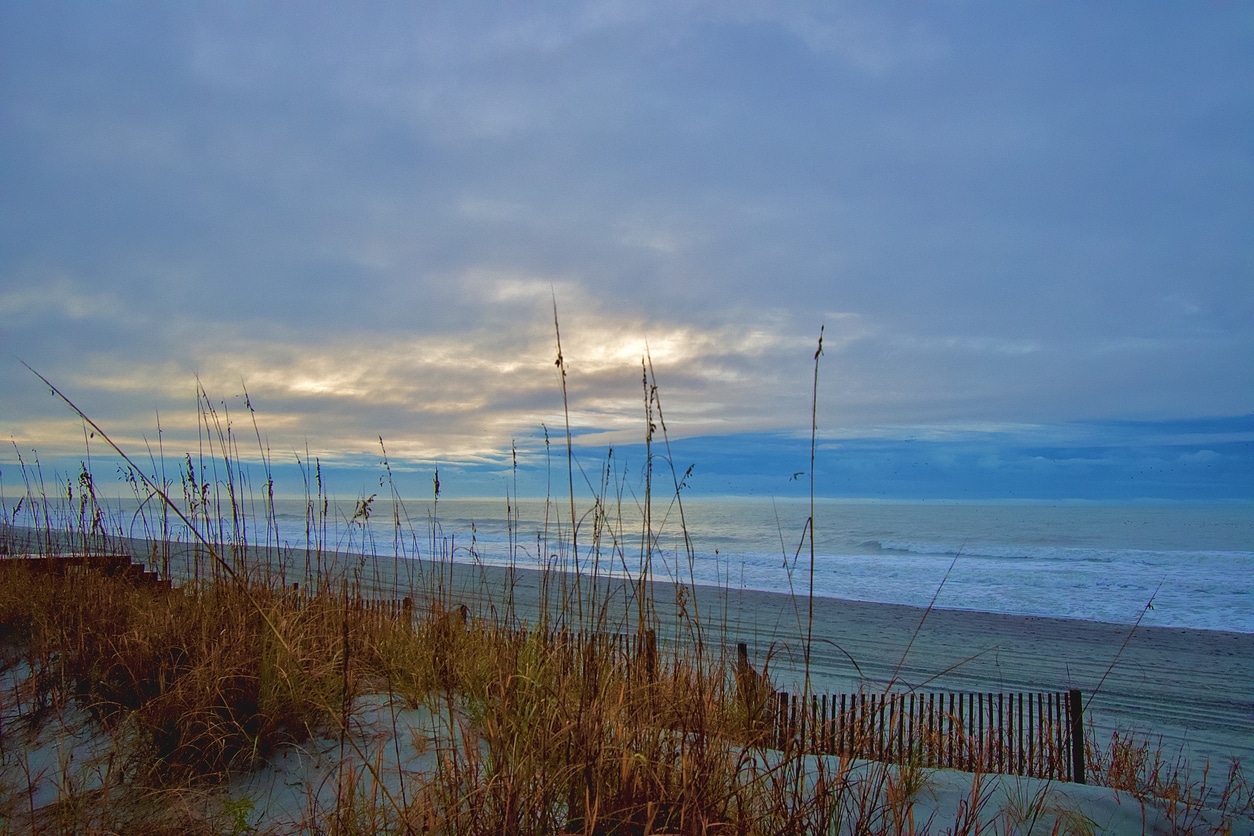
7 Things to Know about Living in Myrtle Beach Before Moving to Myrtle Beach
Thinking about moving to South Carolina? Myrtle Beach has plenty going for it, but it’s not without trade-offs. Before you make the move, get a clear picture of daily life here.
1. The climate in Myrtle Beach brings hot summers and mild winters
Myrtle Beach has a humid subtropical climate, which means long, sticky summers and short, comfortable winters. July highs average around 88°F, and humidity makes it feel hotter. The payoff is that winters are mild, with daytime temperatures often in the 50s and 60s.
Rain is common year-round, but the heaviest downpours happen in summer, when hurricane storm prep is part of daily life for residents, and coastal flooding can be an issue. On the flip side, the warm Atlantic keeps beach season going for months, with ocean water in the low 80s through late summer.
2. The cost of living in Myrtle Beach is lower than the national average
The cost of living in Myrtle Beach runs about 7% below the U.S. average. The cost of housing, which is 29% lower than the national average, is the biggest factor at play, and it makes a significant difference. For example, someone earning $100,000 in Washington, D.C. would only need about $67,000 to maintain the same standard of living here.
Everyday expenses are also manageable. Groceries and healthcare run close to national averages, while utilities can be slightly higher in the humid summers. Taxes are mixed: South Carolina’s 6% state sales tax adds up, but property taxes are among the lowest in the country, which helps homeowners.
How much money do you need to live in Myrtle Beach? MIT’s Living Wage Calculator estimates about $37,000 per year after taxes to cover the basics. Doubling that — around $74,000 — offers a comfortable lifestyle under a 50/30/20 budget, with room for entertainment and savings.
| Ready to make the move to Myrtle Beach? Get a fast, free quote from Colonial. |

3. The Myrtle Beach housing market is cooling slightly while still holding value
The Myrtle Beach housing market has shifted in the past year. Prices are down a bit from the highs, but the city still looks affordable compared to many other coastal spots.
Average home value: $318,650
Year-over-year change: – 4.3% from 2024
Forecast: Zillow projects a slight 0.9% dip by late 2025
In short, the Myrtle Beach housing market looks more favorable for buyers than it did during the pandemic-era run-up. Prices aren’t crashing, but they’re correcting, which can give newcomers a bit more breathing room.
4. The best places to live in Myrtle Beach offer something for everyone
These three areas stand out as some of the best places to live, with each offering a different lifestyle depending on your needs.
Best for families: Forestbrook
Forestbrook is a suburban community just northwest of Myrtle Beach that appeals to families for its good schools, quiet streets, and easy access to primary commuting routes like U.S. 501 and S.C. 31. Median home prices hover around $341,000, making it more affordable than many coastal areas.
The neighborhood is also set to benefit from a major $110 million road-widening project that will add sidewalks and bike lanes, which will improve both safety and convenience.
Best for young adults: Socastee
Socastee offers a lively atmosphere with quick access to nightlife, shopping, and the beach. It’s popular among younger residents who want suburban pricing without giving up proximity to the action.
While parts of Socastee face flooding and some higher crime rates, it still ranks well on “best places to live” lists for the Myrtle Beach area. It’s generally a solid choice for young adults who want a balance between affordability and convenience.
Safest: Surfside Beach
Surfside Beach, nicknamed “The Family Beach,” is known for its relaxed vibe and coastal lifestyle. Home prices average $350,000 and come with a strong sense of community and cleaner, quieter beaches than in central Myrtle Beach.
While property crime is still present, Surfside remains one of the more stable and desirable areas for those looking for safety and a slower pace without straying far from the ocean.

5. Crime rate in Myrtle Beach is significantly above average
Myrtle Beach’s crime rate is well above both state and national benchmarks. According to Areavibes, total crime in Myrtle Beach is 231.8% higher than the U.S. average, with 7,710 crimes per 100,000 people. NeighborhoodScout breaks it down further: violent crime sits at about 10.03 per 1,000 people (i.e. ~1 in 100 chance), and property crime at 58.87 per 1,000 people (~1 in 17).
Note that the crime rate in Myrtle Beach varies by neighborhood. Areas that attract heavy tourist traffic — like the boardwalk, shopping districts, and entertainment corridors — naturally see more incidents.
3 safest neighborhoods in Myrtle Beach
North Myrtle Beach: Technically its own city but part of the greater Grand Strand, this area ranks much lower for crime than central Myrtle Beach and offers a quieter, more residential vibe.
Surfside Beach: Known as “The Family Beach,” Surfside has higher home prices but is popular for its community feel and lower crime rates relative to downtown Myrtle Beach.
Murrells Inlet: Just south of the city, Murrells Inlet blends a strong local community with lower crime numbers and is especially appealing for families and retirees.
3 neighborhoods with the highest crime rates in Myrtle Beach
Myrtle Heights: Stretching near 21st and 22nd Avenues North, this area sees higher reported crime due to its mix of housing and proximity to tourist areas.
Springmaid Beach: Popular oceanfront zones in this area attract both visitors and crime activity, especially property crime.
Market Common: Despite being one of the most desirable lifestyle centers, its retail density means higher reported incidents, especially theft and vandalism.
6. The job market in Myrtle Beach is growing but wages lag behind
Myrtle Beach’s economy leans heavily on tourism, hospitality, and retail, with healthcare and construction also providing steady work. Unemployment here is lower than the national average, which makes it easier to land a job than in many other U.S. cities.
While the job market may be strong in Myrtle Beach, pay can be a challenge. Because so many positions are tied to tourism and service work, wages tend to fall below national benchmarks.
Low unemployment: Myrtle Beach’s unemployment rate is 4.9%.
Tourism-driven economy: Jobs in hospitality, retail, and food service dominate, while healthcare and construction offer year-round stability.
Lower earnings: The median household income is $53,251, well below the U.S. median of $79,466, highlighting the gap in wages.
7. There are more things to do in Myrtle Beach than hitting the beach (although you’ll want to do that too)
Myrtle Beach averages 218 sunny days a year, so it’s easy to get outside in almost any season. Even the city’s name is tied to nature — it comes from the wax myrtle trees that grow along the shore. Here are some attractions to add to your list after you settle in Myrtle Beach:
Unique things to do in Myrtle Beach
Visit the Myrtle Beach Colored School Museum, a small but powerful piece of local civil rights history.
Grab a cone at Kirk’s 1890 Ice Cream Parlor, an old-school spot full of nostalgia and charm.
Walk the Live Oak Allée at Brookgreen Gardens under a tunnel of mossy oaks.
Explore Mt. Atlanticus Minotaur Goff, a fantasy-themed mini golf spectacle.
Wander the Gay Dolphin gift shop, a maze of kitschy finds and local character.
Take a scenic MarshWalk in Murrells Inlet, which boasts restaurants, live music, and water views.
Free things to do in Myrtle Beach
Stroll the Myrtle Beach Boardwalk & Promenade for shops, live music, and ocean views.
Spend time at Myrtle Beach State Park for trails, fishing, and picnic spots.
Enjoy free seasonal concerts and festivals along the boardwalk.
Relax on nearly 60 miles of public beaches — the sun, surf, and shoreline are all free.
Things to do in Myrtle Beach with kids
Visit Ripley’s Aquarium for interactive marine exhibits.
Explore WonderWorks at Broadway at the Beach, an upside-down science playground.
Check out Alligator Adventure near Barefoot Landing.
Catch a minor league baseball game with the Myrtle Beach Pelicans.
Pro Tip: Ready to start packing? Utilize our moving checklist so you don’t miss anything. |
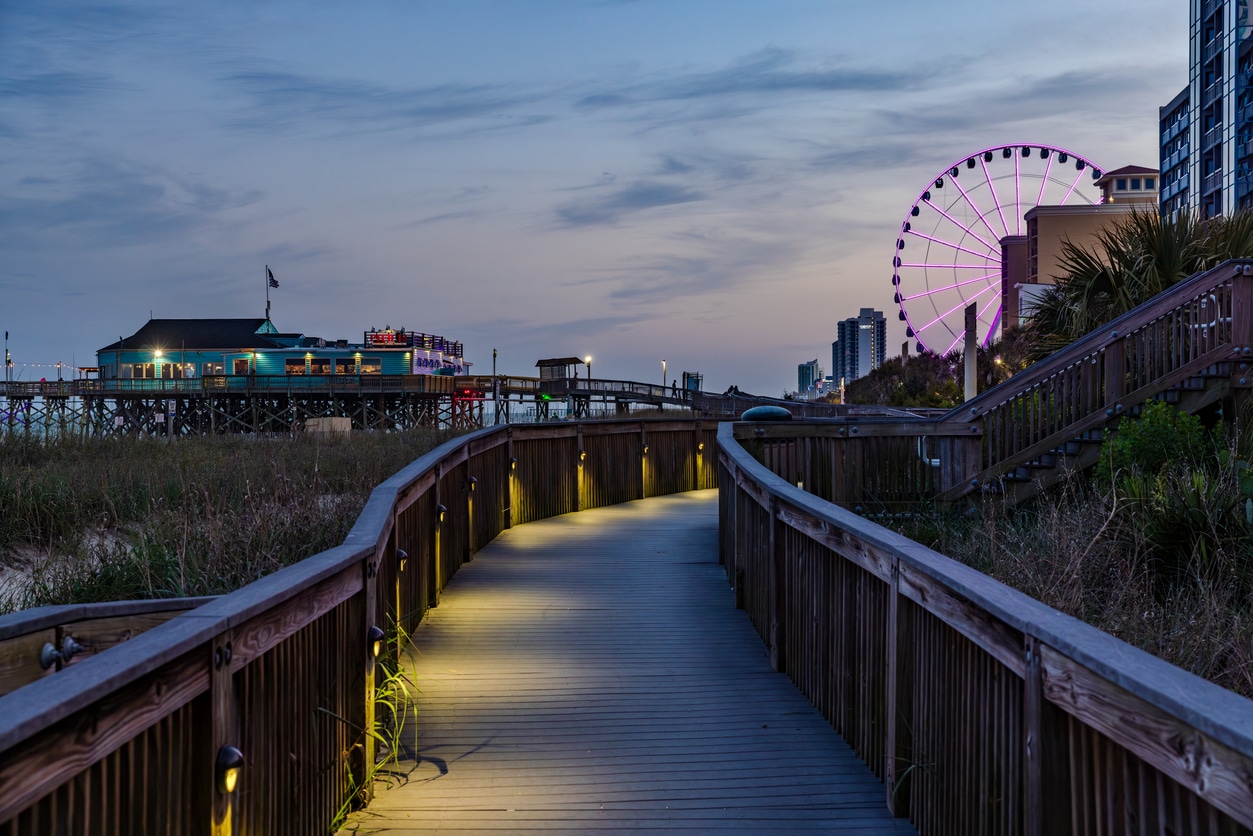
Pros and Cons of Living in Myrtle Beach
Is moving to Myrtle Beach worth it? For many, yes. If you want affordable coastal living, a strong sense of community, and year-round access to the ocean, the pros and cons of living in Myrtle Beach still tilt in favor of making the move.
Pros
A lower cost of living than the national average
Affordable housing compared to other beach towns
Mild winters and plenty of sunny days (over 200 a year)
Endless things to do, from beaches to golf to family attractions
A strong tourism economy with steady job opportunities in service, retail, and healthcare
Tight-knit communities outside the main tourist corridors
Cons
Higher crime rate than state and national averages, concentrated in tourist districts
Seasonal crowds and heavy summer traffic
Wages that lag behind national income levels
Risk of hurricanes and flooding during storm season
Making Myrtle Beach Your Next Home
Myrtle Beach delivers affordable housing, plenty of sunshine, and a community that mixes small-town feel with big attractions. Yes, there are trade-offs, like crime and summer crowds, but most residents find the lifestyle well worth it.
When you’re ready, Colonial Van Lines can get you there. With more than 50 years of long-distance moving experience, we know how to pack, transport, and deliver your belongings with care. Start planning with a free quote today.