

There’s a reason the unofficial motto of Louisiana is, “laissez les bons temps rouler” — or, “let the good times roll.” This jewel of the bayou is known for its diverse fusion of Cajun, Creole, and French influences, which lend a signature flair to the culture, cuisine, and celebrations that attract people from all across the country — and world.
But Louisiana is more than a tourist stop to visit for the jazz music, Mardi Gras festivals, shrimp gumbo, and waterfront views. It’s also a desirable place to live. Around 4.6 million residents call the Pelican State home (a 0.2% increase from 2024) — so what’s the attraction, and is it right for you?
There’s a lot to consider when moving out of state—from the climate and weather, to the rental and housing market, to the job opportunities and some of the best places to live in Louisiana. But you don’t have to navigate this process alone. We’ve got your roadmap to all the ins and outs of moving to Louisiana, so you can let those good times roll!
Pro Tip: Use our printable moving checklist for a smooth, efficient, and hassle-free transition. |
8 Things to Know About Living in Louisiana (Before Moving to Louisiana)
This guide will cover the main considerations to keep in mind about moving to Louisiana, along with the cultural distinctions that make this state so vibrant and unique. So, on that jazzy note, let’s dive into what life is like here in the Pelican State. Here’s what to know:

1. The cost of living in Louisiana is lower than the national average
What is the cost of living in Louisiana? Fortunately, the cost of living in Louisiana is 4% below the national average— it’s also lower than many other Southern states.
For instance, you’ll need about $5,616 per month in Baton Rouge to maintain the same quality of life that would cost you $6,600 per month in Austin, Texas, and $6,800 per month in Atlanta, Georgia. The same is also true for more expensive cities like New Orleans. You’ll need about $6,800 per month in NOLA to maintain the same quality of life that would cost you $8,300 per month in Charleston, South Carolina, and $8,400 per month in Miami, Florida.
So, how much do you need to make to live comfortably in Louisiana? A single adult with no children will need $85,320 per year ($41 per hour) in order to live comfortably here, while a family of four will need $101,880 per year ($48 per hour). It’s also worth noting that Louisiana has the nation’s highest combined state and local sales tax rate of 9.56%, but income taxes are on the lower end at 1.85%–4.25%. Overall, if you’re looking to curb some expenses, moving to Louisiana makes a ton of sense for your wallet.
2. Louisiana is known for balmy (often stormy) weather all year-round
Like many other parts of the Southeast, Louisiana has a subtropical climate with long, humid summers and relatively short, mild winters. The Pelican State receives 216 days of sunshine and 60 inches of rain per year, along with a frequent risk of hurricanes or tropical storms from June to November. These extreme weather patterns can cause severe damage as a result of intense winds, heavy rainfall, and potential flooding.
The coastal towns and cities in Louisiana can be particularly vulnerable to hurricanes and tropical storms — in fact, some pockets of New Orleans are still recovering from the impact of Hurricane Katrina back in 2005. If you plan on moving to Louisiana, educate yourself on the right precautions to take before hurricane season rolls around.
With that said, if you prefer a warm climate, Louisiana is the place for you. The summer months often hover in the mid-90s, while the winter months rarely drop below the 40s–50s—ideal for folks escaping those frostier temperatures in the Northeast or Midwest.
3. Crime rates in Louisiana are higher than many other U.S. states
The median violent crime rate in Louisiana is 5.48% compared to the national average of 4%. Meanwhile, the median property crime rate in Louisiana is 26.3% compared to the national average of 19%. In terms of how it stacks up against the other 49 states, only New Mexico, Alaska, Tennessee, and Arkansas have higher crime rates.
So, is Louisiana safe? As with just about anywhere else, some areas are more prone to crime than others. Be aware of your surroundings, follow common sense safety measures, and your experience living in Louisiana will likely be a positive one.
Here are the three safest cities in Louisiana and the three cities where crimes most generally occur.
Safest cities in Louisiana
Addis
Patterson
Harahan
Highest crime cities in Louisiana
Marksville
Monroe
Alexandria
4. Louisiana’s job market is on an upward momentum trajectory
While the current unemployment rate in Louisiana is 4.5% (versus the 4.2% national average), don’t let this number throw you off. The Pelican State boasts more than four consecutive years of economic growth in almost every metro area, surpassing two million jobs as of 2025. The top industries here are healthcare, manufacturing, aerospace, science and technology, maritime, agriculture, education, transportation, and commercial fishing. Louisiana is also the home of two Fortune 500 Companies: Entergy and Lumen Tehnologies.
If you’re relocating for a job, it’s natural to wonder how much you’ll earn in Louisiana compared to other parts of the U.S. Louisiana’s hourly minimum wage is $7.25 — on par with the national average — and the median annual salary clocks in around $52,290 ($25 per hour). This is higher than many Southern states like South Carolina, Alabama, Florida, Tennessee, and Georgia. New Orleans is arguably the best place in Louisiana for job seekers, but other cities such as Baton Rouge, Lafayette, and Lake Charles are on the rebound, too.
| Ready to make the move to Louisiana? Get a fast, free quote from Colonial. |
5. Living in Louisiana means an affordable housing and rental market
Ready to purchase a new home in the Pelican State? You’re in luck — the Louisiana housing market is considerably less expensive than the U.S. as a whole. A house in Louisiana will cost you about $212,040 (down 1.3% from 2024), compared to the national average of $368,580. Real estate professionals also rank Louisiana as one of the best states for middle-income Americans to find a home within their budget.
If moving to Louisiana is on your forecast, there’s no better time to start house hunting — but if you prefer to rent for a while before putting down roots, that’s an affordable option as well.
The average cost of a one-bedroom apartment in Louisiana is about $1,265 per month. Of course, keep in mind, the exact rent will fluctuate based on where you choose to live. For instance, an apartment in New Orleans will set you back around $1,400 per month, while an apartment in Lake Charles will only cost around $1,110 per month.

6. Louisiana has a distinct culture that sets it apart from anywhere else
From the cuisine and the entertainment, to the music and the expressions, Louisiana’s unique culture is entirely its own.
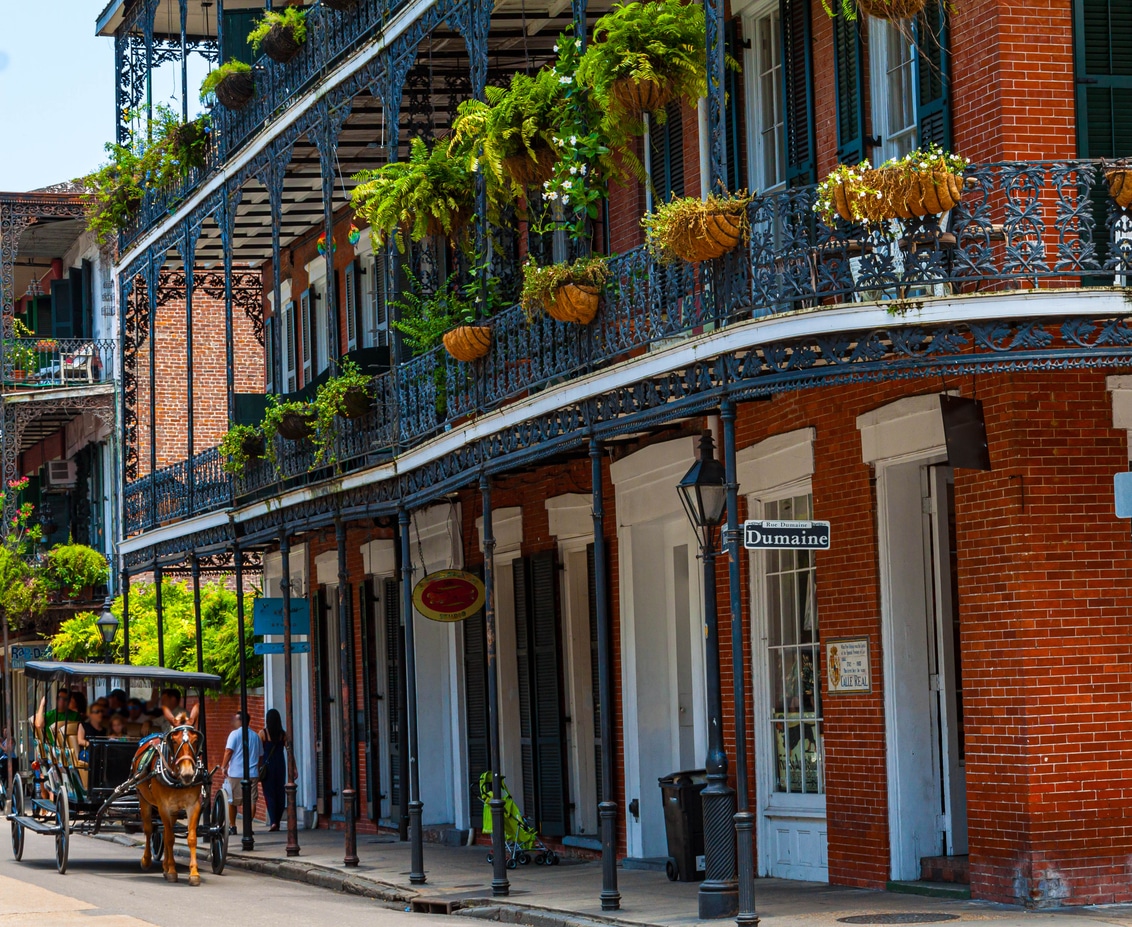
Case in point: Nowhere else can you taste the robust flavors of authentic gumbo and jambalaya, listen to the improvised rhythms of a traditional jazz quartet, experience the Mardi Gras celebrations that have taken place for centuries, or hear someone ask, “Where y’at?” (New Orleans slang for, “Where are you?”).
Where does this multicultural identity come from? Louisiana draws its heritage from Caribbean, African, Native American, French, and Spanish influences.
This state was colonized by both the French and Spanish from the 1700s to its annexation by the U.S. in 1803. During this time, enslaved African, Caribbean, and Indigenous folks created their own fusion of linguistic, musical, culinary, and folklore practices, which ultimately intersected with French and Spanish customs, too. This overlap led to the Creole culture of today.
Meanwhile, the Cajun influence in Louisiana can trace its roots to French-Canadian settlers who came from Acadie (now Nova Scotia) to rural Southwestern Louisiana in the 18th century. The term “Cajun” derives from a French dialect, meaning “Acadian.” Both the Creoles and Cajuns have shaped life here in Louisiana for almost 300 years, and echoes of this rich history are still present across the state.
Every bite of a seafood boil or note from a saxophone carries the dynamic cultural nuances that make Louisiana so special.
7. The best places to live in Louisiana have their fair share of selling points
What part of Louisiana is a good place to live? Ultimately, this will come down to your main priorities. Do you want an urban atmosphere with diverse cultural attractions and an abundance of entertainment options? Or would you rather settle into a quiet suburban community where kids can run free in their neighborhoods? Whatever your preferences, here are three of the best places to live in Louisiana.
Addis: Best for raising a family
This suburban enclave west of Baton Rouge is one of the best places in Louisiana for families to thrive. Addis’ low crime rates, excellent public schools, and numerous community events and amenities make it a perfect setting to raise children.
Enjoy the splash pad, athletic facilities, and picnic areas at Myhand Park. Then, treat the whole family to a sweet treat at Tasty Cream Donut Shop. And of course, don’t miss the annual Mardi Gras Parade.
New Orleans: Best for young adults
As the largest city in Louisiana, New Orleans is the place to be for young adults who want cool urban vibes, access to career opportunities, and a buzzy entertainment scene.
From dynamic commercial hubs, trendy co-working spaces, and convenient walkable streets in the Central Business District, to jazz clubs, performance venues, bistros, and street festivals in the French Quarter, New Orleans strikes an ideal balance of work and play.
Lake Charles: Best for affordability
If you want an affordable lifestyle that doesn’t sacrifice comfort and enjoyment, look no further than Lake Charles. This picturesque waterfront village combines a reasonable housing market and hospitable small-town charm with outdoor recreation and a full calendar of events.
Sample the local cuisine and libations at Chuck Eats Restaurant Week. Explore 26 miles of wilderness along the Creole Nature Trail. Or peruse the eclectic vintage stores, boutiques, art galleries, coffee shops, and farm-to-table cafés in Downtown Lake Charles.
Pro Tip: Once you narrow down the part of Louisiana you want to live in, streamline the relocation process, from start to finish, with these handy moving apps. |

8. Moving to Louisiana will offer access to top-notch entertainment
Whether you’re in the mood for a memorable night on the town, an outdoor excursion with lush nature views, or a family-oriented attraction for kids (or even kids-at-heart!), there’s no shortage of fun activities to do in Louisiana. Here are a few to add to your calendar:
Cultural activities
Tour the Whitney Plantation, the only historic plantation in Louisiana that solely focuses on preserving the stories of slaves n the American South.
Experience authentic Zydeco music (a genre that blends Cajun, African, French, and Caribbean influences) at the Festival International de Louisiane.
Usher in the holiday season at the almost 100-year-old Natchitoches Christmas Festival, which features live music, food, arts and crafts, and a fireworks show.
Outdoor activities
Take an airboat ride through the Atchafalaya Swamp Basin, the largest river marsh in the U.S., with a diverse ecosystem of plants, birds, fish, and reptiles.
Explore 604,000 acres of sandstone bluffs, longleaf pine forests, and pristine bayous at Kisatchie National Forest, the only one of its kind in Louisiana.
Take a birdwatching excursion at the Cameron Prairie National Wildlife Refuge, which attracts over 55,000 migratory birds in the peak winter months.
Free activities
Meander through 200 acres of scenic flora and fauna at the Independence Botanical Gardens, such as roses, crepe myrtles, irises, and butterflies.
Immerse yourself in local New Orleans cuisine, music, artisans, and family activities at the Bayou Boogaloo festival on the shores of Bayou St. John.
Check out the street performers and Louisiana-based arts and crafts vendor booths at Frenchmen Art Market, the nation’s oldest public market.
Nightlife activities
Get your two-step on at one of Lafayette’s numerous dance halls, clubs, and saloons, where you can groove to traditional Cajun and Creole music.
Cheer on your favorite local sports team or attend a concert with touring indie musicians at The Varsity Theatre in downtown Baton Rouge.
Experience the iconic entertainment and lively atmosphere of Bourbon Street, the most famous nightlife district in New Orleans’ French Quarter.
Pros and Cons of Living in Louisiana
Is Louisiana a good state to live in? Bottom line: The affordable housing, cultural diversity, thrilling entertainment options, strong economic outlook, and spectacular outdoor recreation make Louisiana an undeniably attractive place to call home. But as with anywhere else, those numerous benefits also come with a few potential drawbacks.
Here are some pros and cons of living in Louisiana to help determine if it’s right for your next chapter:
Pros of living in Louisiana
Low cost of living
Affordable housing
Favorable job market
Warm year-round climate
Unique cultural scene
Dynamic entertainment
Cons of living in Louisiana
Tropical storms and hurricanes
High crime in certain areas
Elevated sales tax rates
Start Your New Louisiana Chapter with Colonial Van Lines
If you love the idea of inexpensive housing and phenomenal entertainment—and seasonal weather extremes don’t faze you—moving to Louisiana is an excellent choice.
When it’s time to make this leap, Colonial Van Lines has you covered. With more than 50 years of experience in long-distance moving, our team of experts can handle all the logistics to ensure both a smooth and safe arrival at your new Louisiana home. Contact us for a free quote today!