

A DIY move puts you in charge of every step. You rent a truck sized to your load and buy or gather boxes and supplies. You recruit friends or family to help you pack, lift, and load. Then you drive the truck to your new home, unload, and return the rental. For a small move, that can make sense.
The costs go beyond the rental, though. Truck rental is only the starting line. You'll also need to factor in other costs:
- Fuel for a large truck
- Mileage and one-way fees
- Tolls
- Packing supplies
- Equipment like dollies, straps, and furniture pads
On a long haul, you may also need a hotel along the way and time off work. These extras aren't things that show up on the rental truck receipt, but as the distance grows, they certainly narrow the financial gap between DIY and a professional move.
A DIY move means the effort and the risk are yours, too. Moving is physically demanding. Lifting heavy furniture without training or proper equipment increases the risk of injury and causing damage to your belongings and your home. When a helper is hurt or something breaks, there's no workers' compensation or professional coverage to fall back on. That can strain relationships along with your back.
Distance and size also change the math. A single rental truck holds only so much. A larger home can mean multiple trips or a bigger vehicle than you're comfortable driving. Crossing several states adds days of driving, fuel, and lodging. There comes a point where the load is too big and the distance too far for a self-move to stay practical.
That's where professional interstate movers like Colonial Van Lines come in.
Features Snapshot
Feature | Colonial Van Lines | DIY Move |
|---|---|---|
Who does the work | Our trained crews | You, with help from friends or family |
The truck and driving | Our trucks, driven by our team | A rental truck you drive yourself |
What you pay for | A weight-based, full-service quote | Truck rental, fuel, supplies, and your time |
Physical effort | Handled for you | On you and your helpers |
Protection for belongings | Professional handling and valuation coverage | No professional handling or coverage |
Specialty and storage | Crating, climate-controlled storage, auto shipping | Not included |
Best for | Larger, longer, state-to-state moves | Small, short, budget-first moves |
Cost up front | Higher, since you pay for labor and expertise | Usually lower, especially on small moves |
What Customers Prefer
Why people choose Colonial Van Lines
Why people choose a DIY move
What You Gain (and Lose) With a DIY Move
A DIY move has advantages, especially for a certain kind of relocation.
For a small, short, budget-first move, renting a truck and doing the work yourself is often the cheapest option because you pay for the truck and fuel rather than a crew's labor. You control the timing and decide how your belongings are packed. With a couple of willing helpers, a light load is manageable. For a studio or one-bedroom moving a short distance, DIY can be the smart choice.

The trade-offs grow as the move gets bigger:
- The work is all yours. Packing, lifting, loading, driving, and unloading fall on you and whoever you can recruit.
- Injury and damage risk climb. People and belongings are more exposed without professional technique, padding, and equipment.
- Help is unpredictable. Plans change, and there's no coverage when a helper is hurt or something breaks.
- Long drives are demanding. A large rental truck means fuel, tolls, lodging, time off work, and hours behind the wheel of an unfamiliar vehicle.
- Hidden costs add up. Mileage, one-way fees, supplies, and equipment rentals can shrink the savings on a big or far move.
- Capacity is limited. A single truck holds only so much, so a larger home may need multiple trips.
None of this means a DIY move is a bad choice. It can be a good fit for smaller, shorter moves. But as the home gets bigger and the distance gets longer, everything from the effort and risk to the hidden costs grows. At that point, the benefits of using a cross-country moving service like Colonial Van Lines start to outweigh the cost.
Breakdown by What Matters Most
Cost
On paper, a DIY move is usually cheaper, since you're paying for a truck and fuel instead of a professional crew. On a small, short move, that advantage is usually the biggest factor.
The gap narrows on a larger or longer move once you add mileage, fuel, supplies, lodging, time off work, and the cost of any damage. Colonial Van Lines gives you a transparent, weight-based number so you can compare the full picture, not just the sticker price of a rental.
The final mile: For a small, short move on a tight budget, DIY usually wins on cost. For a large or long-distance move, the true cost of doing it yourself narrows the gap. In those cases, the cost for long-distance movers like Colonial Van Lines can be the better value.
Physical Effort and Labor
A DIY move asks you and your helpers to do all the lifting, from the first box to the last piece of furniture. That can mean a full weekend (or longer) of hard, unfamiliar work.
When you hire full-service cross-country movers like Colonial Van Lines, you'll have a trained crew that handles the heavy work for you, using proper equipment and technique.
The final mile: For anyone who would rather not spend a weekend hauling furniture, Colonial Van Lines' interstate packers and movers have the clear edge.
Risk to Your Belongings
Without professional padding, equipment, and experience, a self-move raises the odds of damage to your things and your home. There's no coverage if a friend is hurt. High-value and fragile items are especially exposed.
At Colonial Van Lines, we train our crews and offer valuation coverage. We also provide crating for fine art, pianos, and other high-value pieces.
The final mile: For protecting fragile, heavy, or high-value belongings, Colonial Van Lines is the safer choice.
Time and Convenience
A DIY move can take days of your time across planning, packing, loading, driving, and unloading. When your schedule is full, that time is valuable.
Colonial Van Lines handles the labor and logistics. A professional crew can often complete in hours what would take you an entire weekend.
The final mile: For a faster, hands-off move, Colonial Van Lines wins. For those with time to spare and a light load, DIY can work.
Control and Flexibility
A DIY move gives you complete control. You set the schedule, decide how each item is packed, and move at your own pace.
A professional move trades some of that hands-on control for convenience, since a crew handles the work on a scheduled timeline.
The final mile: For maximum control over timing and handling, a DIY move is hard to beat. Trading some control for convenience means Colonial Van Lines comes out on top.
Long-Distance Practicality
A single rental truck holds only so much. Driving it across several states adds days of fuel, lodging, and time. A larger home can mean pushing a DIY move into multiple trips or driving a vehicle most people aren't comfortable with.
Colonial Van Lines is built for exactly this kind of move. We have the equipment, licensing, and crews to carry a full household across the country in one coordinated trip.
The final mile: For a large, cross-country move, a professional carrier like Colonial Van Lines is built for the distance. For a small, short hop, DIY is practical.
How Colonial Van Lines Approaches Your Long-Distance Move
Colonial Van Lines is a direct carrier. We only perform long-distance, state-to-state moves across the U.S. Our own crews perform every move; we don't hand your belongings off to an outside company. Our system provides one team and one point of accountability to handle your move.
Most of our customers are hiring long-distance movers for the first time, so we lead with education. We explain your move in plain terms:
- How pricing works
- What kind of timeline you can expect
- Which services you might need
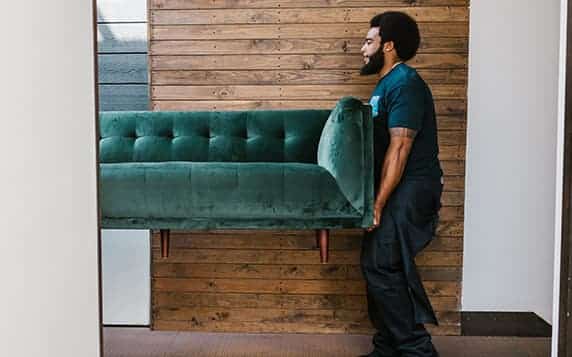
We build our estimates after conducting a proper survey of your belongings using photo and video virtual estimates. This keeps your quote transparent and free of surprises.
Before handling any of your belongings, our movers train through Colonial Van Lines University, our in-house program. We provide a variety of services:
- Full-service and partial packing
- Custom crating for pianos, fine art, heirlooms, and other high-value items
- Furniture disassembly and reassembly
- Short-term and long-term climate-controlled storage
We hold full certification and licensing with the U.S. Department of Transportation and the Federal Motor Carrier Safety Administration. We also hold ProMover certification and an A+ rating with the Better Business Bureau.
For every interstate move, we bring decades of expertise and national recognition.
The Last Box
Both a DIY move and a professional move can get your household from one home to the next, but they ask very different things from you.
A DIY move can be the right call when your move is small, your distance is short, and your budget is tight. Renting a truck, leaning on friends and family, and controlling the timing yourself can save money on a light load. For the right move, those savings can be worth the effort.
Colonial Van Lines is a professional long-distance carrier built around trained crews, firm weight-based quotes, and full-service options for all customers. As a move gets bigger, farther, or more valuable, the effort and risk of doing it yourself grow. That's the point where a professional crew is worth the cost.
In the end, the choice is a trade between the money you save and the time, effort, and risk you take on. The bigger and farther the move, the more that trade tends to favor a professional.
Get a Free Quote
Not sure whether your move is worth doing yourself? It helps to see the full picture before you decide. Colonial Van Lines will explain your options and survey your home. Then we'll give you a free, no-pressure quote based on the weight of your shipment. Request your free quote today and compare it against the true cost of a self-move.
FAQs
On paper, a DIY move is usually cheaper, especially for a small, short move where you pay for a truck and fuel instead of a crew. The gap narrows on larger or long-distance moves once you add mileage, fuel, supplies, lodging, and time off work.
The cheapest option isn't always the best value, especially when you consider effort and risk. Comparing a full professional quote against your real DIY costs is the clearest way to decide.
Friends and family can save you money on labor, and for a light load, they're very helpful. The trade-off is that moving is physically demanding, and lifting heavy furniture without training raises the risk of injury. There's usually no coverage when a helper is hurt or something is damaged, which can also strain relationships.
For heavy, fragile, or high-value items, trained movers are the safer option.
Driving a large moving truck is very different from driving a car due to its wider body, longer stopping distance, and large blind spots. Over a long distance, that means hours of focused driving, fuel stops, tolls, and often an overnight stay. Many people find driving one of the biggest drawbacks of a self-move.
When you aren't comfortable behind the wheel of a big truck, a professional carrier does the driving for you.
The largest consumer moving trucks are sized for a few rooms of furniture, not always an entire large home. A bigger household can exceed one truckload, which means multiple trips or a vehicle larger than most people want to drive. Underestimating the size you need is a common DIY mistake.
A professional mover sizes the equipment to your full shipment so it moves in one coordinated trip.
Yes. Our professional movers offer full-service and partial packing, so you can hand off everything or just the fragile and high-value items. They bring quality supplies and use techniques designed to protect your belongings in transit.
Not by default. A rental truck may come with optional coverage for the vehicle, but that doesn't protect the contents inside. Some homeowner's or renter's policies cover belongings in transit, so it's worth checking your policy. A licensed moving carrier, by contrast, offers valuation coverage options built specifically for your shipment.
Weigh four things:
- The size of your move
- The distance
- Your budget
- How much time and effort you can give
A DIY move is often sufficient for a small, short, budget-first move. A large, long, or high-value move tends to go more smoothly with professional movers. Add up the real cost of doing it yourself, including fuel, supplies, and time, before you compare.
Getting a free professional quote from a Colonial Van Lines representative gives you a clear number to weigh against your DIY estimate. Reach out today to see which option fits best for your move.