
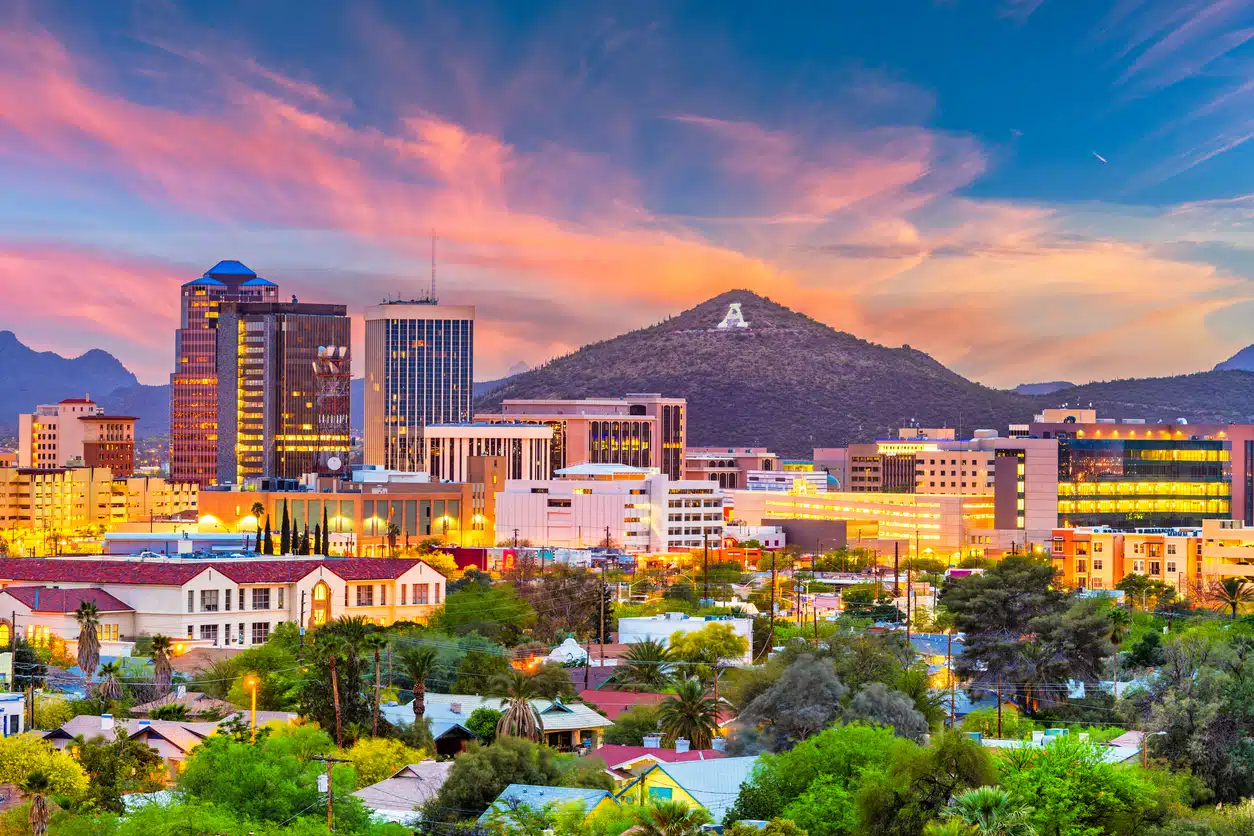
When you think of Arizona, most people might think of Phoenix or the Grand Canyon. But don’t overlook Tucson. Known as “The Old Pueblo” for its ancient Indigenous-Spanish roots, Tucson is a flourishing cultural hub, outdoor recreation, historic landmarks, artisan festivals, and Southwestern cuisine. Residents also enjoy sweeping views of the Santa Catalina Mountains and convenient access to Saguaro National Park. But what’s it like living in Tucson — and is this desert oasis the right choice for you?
Whether you’re relocating a couple towns over or moving out of state, Tucson just might be the prime destination for a sunny new chapter. This guide covers all you need to know about living in Tucson — from the weather and climate, to the housing market and job forecast, to the must-see attractions, and so much more.
Fast Facts About Living in Tucson
Population: 556,854
Land Mass: 227 square miles
Median Age: 35 years old
Average Home Value: $324,535
Average Apartment Rental: $1,233 per month
Median Household Income: $76,900 (family of four)
Fun Facts: Tucson is one of the oldest continuously inhabited parts of the U.S—its first settlers, the Hohokam Indigenous tribe, have been here for over 4,000 years. Tucson is also home to the nation’s oldest Mexican restaurant, El Charro, which has been serving authentic Southwestern fare for about a century.
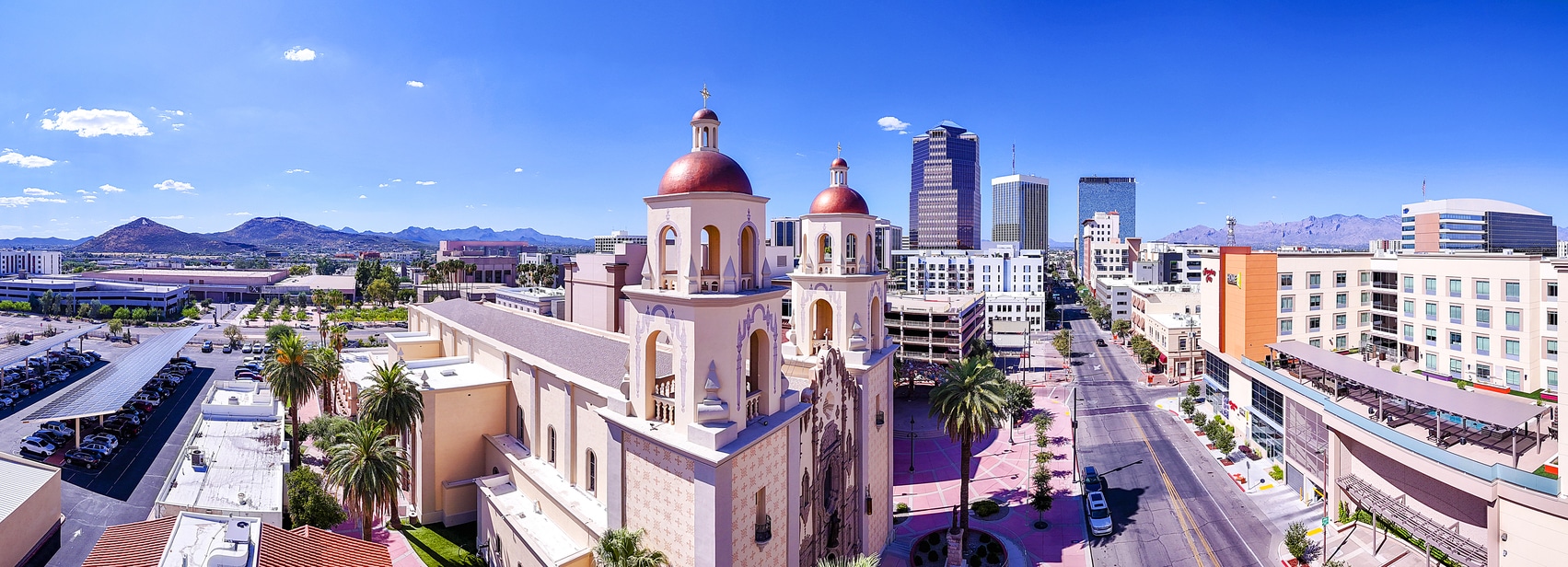
What To Know About Living in Tucson Before Moving to Tucson
Nestled in a pocket of the Sonoran Desert about 70 miles north of the Mexican border, Tucson is the second largest city in Arizona. Its fusion of lush natural scenery and hip urban accessibility makes Tucson a desirable spot for lifelong Arizonans and cross-country transplants alike. But before you hitch up that moving truck to head out West, here are eight considerations you’ll want to keep in mind about living in Tucson.
1. Tucson boasts a warm and sunny climate all year round
Tucson’s climate is a subtropical desert with hot summers, mild winters, and about 286 days of sunshine per year. At the height of summer, temperatures can hover between 100–110 degrees, while even the chilliest winter months rarely drop below 40 degrees.
Summer in Tucson is usually known as monsoon season — but in recent years, persistent drought conditions have set in, reducing the amount of annual rainfall to only 12 inches. In fact, 2025 was one of Tucson’s driest summers on record, with less than six inches of rain from June to September. Although not as common here as in Phoenix, massive dust storms known as haboobs can also roll through Tucson in the wake of a rare monsoon. But most of the time, living in Tucson, means intense heat and minimal rain.
2. The cost of living in Tucson is more affordable than other cities
While the cost of living in Tucson is currently 3% above the national average, it’s still a much cheaper place to live than some of the other major cities out West.
In general, a family of four will spend about $3,815 on living expenses each month, while a single person will spend about $1,087. Expect groceries and utilities in Tucson to be slightly pricier than the national average (but not by much) and housing to be lower.
Here’s how the cost of living in Tucson compares to cities such as Dallas, Phoenix, and Los Angeles:
Cost of living in Tucson versus Dallas: 8.9% lower
Cost of living in Tucson versus Phoenix: 9.2% lower
Cost of living in Tucson versus Los Angeles: 20.4% lower
3. Tucson’s housing market is on par with the national average
The Tucson housing market is currently quite affordable, with the median home value clocking in around $322,505. That’s a 3.6% decrease from 2024 and slightly below the national average of $360,727. This city also boasts some of the cheapest homes in Arizona, compared to cities like Sedona, Flagstaff, Phoenix, Goodyear, Prescott, and Payson.
Recent forecasts show that listing prices could fall even lower in 2026 — excellent news if you want to purchase a house when moving to Tucson.
But if you’d rather rent for a while before putting down roots, that’s a cost-effective option too. Rent on a two-bedroom apartment will set you back around $1,307 per month versus $1,642 in Phoenix. Of course, rent can fluctuate in different parts of town. For instance, a historic, affluent neighborhood like West University will cost more than a suburban area like Oro Valley.
| Ready to make the move to Tucson?
Get a fast, free quote from Colonial. |
4. The best places to live in Tucson feature numerous selling points
Tucson is organized into six official districts — each with their own specific neighborhood vibes. But which area is the right choice for you? Whether you prefer a vibrant urban corridor with walkable entertainment or a quiet suburban enclave with nature access and excellent schools, here are our picks for the three best places to live in Tucson.
West University: Best for young adults
With its trendy urban feel, buzzy entertainment venues, and funky assortment of Art Deco and Neoclassical bungalow homes, West University is a prime location for young adults.
The walk score of 87 and bike score of 94 place you just around the corner from coffee shops, vintage boutiques, indie bookstores, restaurants, and breweries. Not to mention, the close proximity to both downtown Tucson and the University of Arizona makes your commute to school or work a breeze.
West University also has a strong community spirit, thanks to fun local attractions like the Fourth Avenue Street Fair in the winter and spring.
Civano: Best for raising a family
About 25 minutes north of downtown, Civano is one of the best places in Tucson for families to settle. This master-planned community features a tranquil ambiance with a top-notch school district, low crime rates, and access to outdoor recreation for all ages — from plant nurseries and playgrounds to scenic desert trails.
Civano was also one of the first U.S. neighborhoods to be built for sustainable living, complete with community-wide initiatives to harness solar energy, conserve water, minimize waste, and promote walkability.
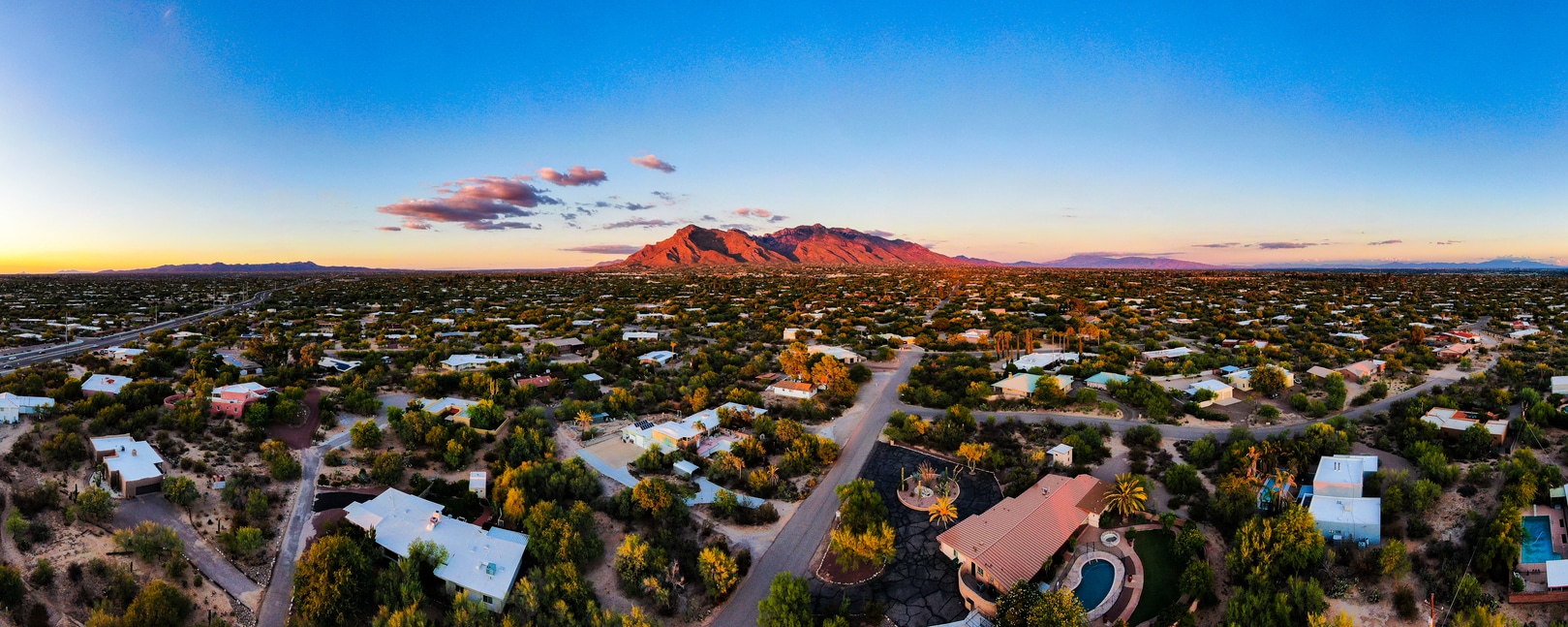
Catalina Foothills: Best for retirees
If you’re in search of a lush environment to ease into those “golden years,” look no further than Catalina Foothills. Less than 15 minutes from downtown Tucson, this neighborhood offers a mix of urban convenience and upscale suburban amenities.
Think: world-class golf courses and tennis courts at La Paloma Country Club, premier retailers and eateries at La Encantada, and inspiring views of the Santa Catalina Mountains in all directions. Catalina Foothills also has a reliable safety rating, so you can retire with peace of mind.
Figured out where in Tucson you want to settle down? Use our printable moving checklist to make this transition feel smooth and seamless. |
5. Crime rates in Tucson can be high—based on where you live
Overall, is Tucson safe? As with anywhere else, that answer varies based on where you live. The crime rate in Tucson is 40% above the national average (about 3,194 crimes per 100,000 residents). It’s also higher than the state average of Arizona, but before those numbers deter you from moving to Tucson, keep in mind: the majority of crimes occur in small, concentrated areas — just like most cities. On that note, here are the three safest neighborhoods in Tucson and three neighborhoods you’ll want to exercise more caution around.
Safest neighborhoods in Tucson
Civano
Poets Square
Catalina Foothills
Highest crime neighborhoods in Tucson
Western Hills
Rancho Buena
Balboa Heights
6. Tucson offers decent public transit, but it helps to have a car
Tucson’s free public transit service, Sun Tran, offers 26 bus routes, 11 weekday commuter routes, and a 3.9-mile streetcar loop for convenient access to the University of Arizona, along with other local attractions and points of interest. Sun Tran also offers a paratransit shuttle for folks who require certain mobility accommodations.
Tucson also features a car-free bike loop that stretches across more than 130 miles if you ‘d rather commute on two wheels. With that said, this is a large metro area connected by major freeways (the I-10 and I-19), so it’s easier to navigate if you own a car.
7. The Tucson job market is somewhat of a mixed bag
Tucson’s economy has seen a modest increase within recent years, but the progress has been slow with about a 1% annual job growth forecast in 2025. Recent estimates place the Tucson unemployment rate at 4.8%, which is above the national average of 4.3%.
Still, many industries are thriving here — particularly education and healthcare, the city’s two main economic drivers. The University of Arizona employs over 14,000 Tucson residents, while Banner Health’s local University Medical Center employs about 7,000 people. You can also find some exciting career opportunities in other industries such as manufacturing, aerospace, construction, logistics, hospitality, tourism, or creative media.
When moving to Tucson, expect an annual salary of $77,000. That’s less than what you can earn in cities like Dallas, Phoenix, and Los Angeles—but when you factor in the more affordable cost of living in Tucson, it tends to even out.
What salary do you need to live in Tucson? In order to live comfortably in Tucson, a single person with no children will need to earn about $86,736 per year, while a household of four will need about $107,910 per year. |
8. Living in Tucson means you’ll never run out of fun activities
From the infectious energy of its unique creative arts scene, to the exhilaration of its outdoor recreation and spectacular nature views, Tucson is full of entertainment options for whatever interests you. Whether it’s a leisurely afternoon in a museum or a lively weekend at a national park, here are some of the most fun activities to do in Tucson.
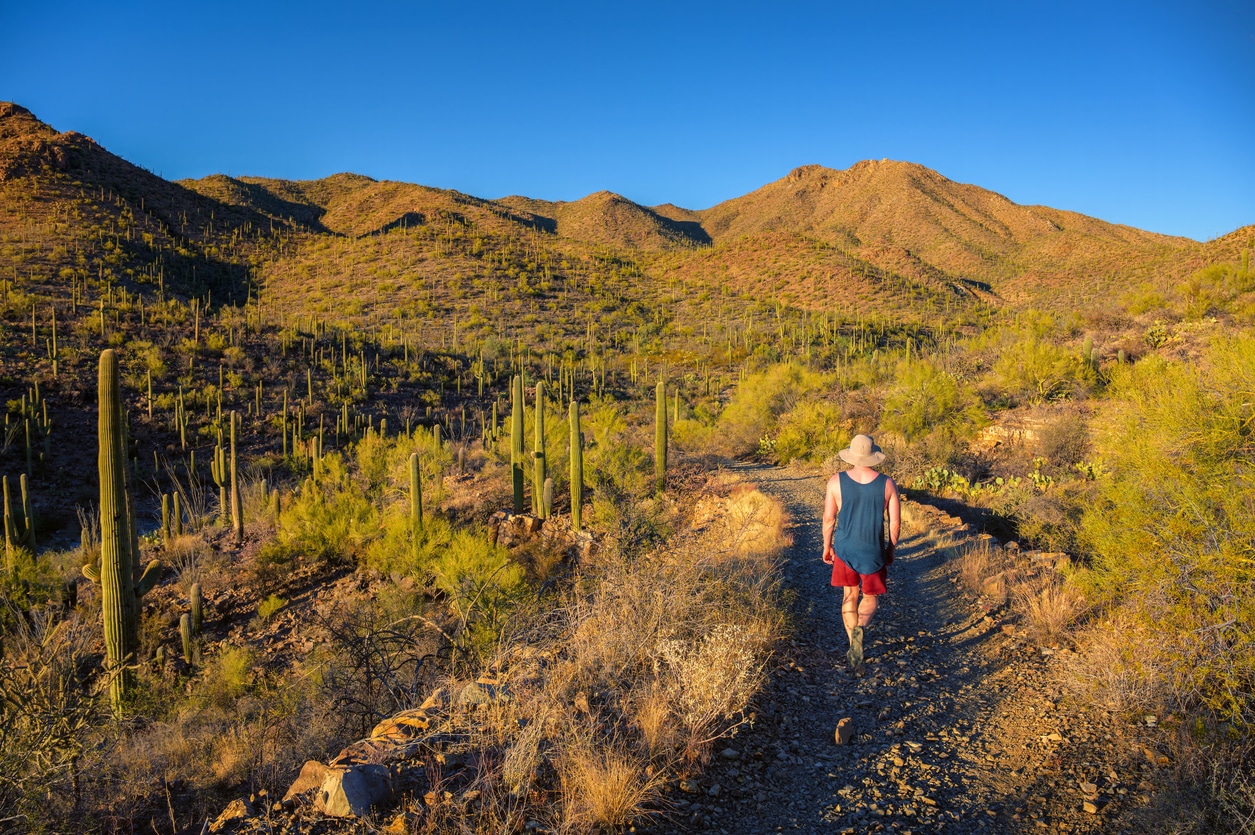
Outdoor recreation
Explore nearly 50 acres of native Sonoran Desert flora, then peruse gallery exhibits from eclectic local artists at the Tohono Chul Botanical Gardens.
Bike along 15 miles of trails in the 880-acre Sweetwater Preserve, nestled in the eastern foothills of the picturesque Tucson Mountain range.
Get up close and personal with over two million Giant Saguaro cacti — an iconic symbol of the American West — at Saguaro National Park.
Arts and entertainment
Check out eclectic artisan vendors, live music performers, and gourmet food makers at the St. Philips Plaza Market on Saturdays and Sundays.
Immerse yourself in Western, Latin American, and Indigenous artwork — across historic and contemporary eras — at the Tucson Museum of Art.
Catch a touring concert, stand-up comedy show, or musical production at Fox Tucson Theatre, a beloved local institution since the 1930s.
Culinary scene
Indulge in homestyle South of the Border cuisine — from tamales to chimichangas — at El Charro, the oldest Mexican restaurant in the United States.
Sample local craft beer and gastropub fare in an industrial ambiance at Barrio Brewing, Arizona’s most historic brewery taproom.
Take a Downtown Tucson Food Tour and learn how The Old Pueblo became America’s first recognized UNESCO World City of Gastronomy.
Your Main Options for Moving to Tucson
Now that you know what to expect about living in Tucson, let’s chat options for how to actually move there. Each of the following relocation solutions come with a mix of pros and cons, so here’s what to consider about all three of them.
DIY Rental Truck
With a DIY move, you rent the truck, then handle the logistics yourself. This includes packing boxes, loading the truck, then driving it to your new home and unloading all the items. DIY moving can be cheaper than other methods, but it also requires more time and effort—not to mention, you’ll have to maneuver that large truck on unfamiliar roads.
Moving Container
With this solution, a rental company delivers a portable container to you before the move. Once it arrives, just load your items in the container at your own pace, then the company will retrieve it and transport the container to your new home or a storage unit. This is a solid option if you want built-in storage and a flexible timeframe—without the hassle of driving a truck.
Full-Service Movers
With full-service movers, a professional team takes care of the entire process for you — from packing and loading to transportation and unloading. Some full-service movers can also handle high-value or specialty items. A full-service move generally costs more than other solutions, but you get what you pay for: an easy and convenient experience — with no manual labor or driving on your part.
How Much Does Moving to Tucson Cost?
The cost of moving to Tucson can fluctuate based on numerous variables such as when you relocate, the kind of service you use, and where you’re moving from. But just so you have a basic idea of how much to budget for, here’s a quick rundown of how much it costs to relocate to Tucson from three of the most common out of state moving routes.
Moving from Los Angeles to Tucson
Angelenos who are tired of the persistent wildfire risks, traffic congestion, and the city’s expensive cost of living flock to Tucson in search of a more laidback and cost-effective change of pace. If you’re moving to Tucson from LA, you can expect to set aside about $3500-$4500.
Moving from Dallas to Tucson
Even though Texans are loyal to their soil, a massive concrete jungle like Dallas can start to feel suffocating after a while. If you crave the perfect combination of both natural scenery and urban accessibility, Tucson has you covered—it’ll cost about $1700-$2700 to relocate here.
Moving from Seattle to Tucson
Seattleites who want to replace constant rainfall with perennial sunshine will be right at home in Tucson. Sure, summers are hotter than what you’re used to near the Puget Sound, but the skies are blue year-round. Earmark $4700-$5700 for a move to Tucson from Seattle.
Moving to Tucson in the peak summer season? Follow these handy summer moving tips to streamline the process without breaking a sweat. |
Start Your Tucson Adventure with Colonial Van Lines
If you love the thought of a diverse cultural scene, unique artistic vibes, and a reasonable cost of living—and you’re not afraid of the intense desert heat—then moving to Tucson could be just the right spot to call home.
When it’s time to embark on your new chapter, let Colonial Van Lines handle all the logistics for you. With extensive experience in long-distance moving, our team has both the equipment and expertise to make your transition a seamless one. Contact us for a free quote today!