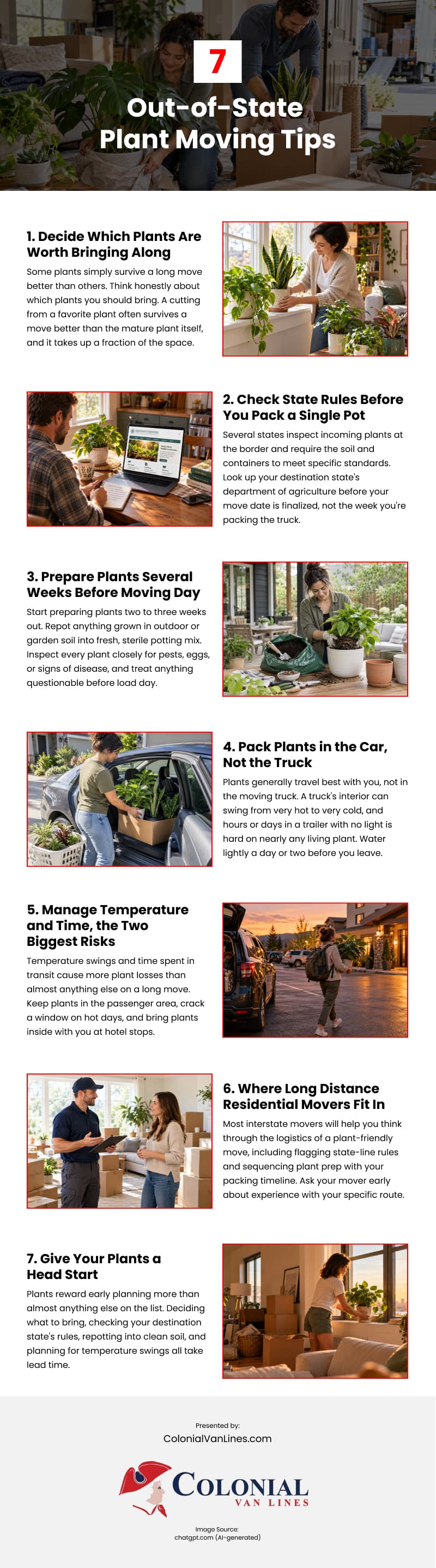


Packing up a home is one thing. Packing up a windowsill full of plants you’ve kept alive for years is another. Plants don’t travel the same way furniture does: they need light, water, and a stable temperature the whole way. A long drive across state lines can undo months of careful care in a single afternoon if you don’t plan ahead.
Below, we’ll walk through which plants are worth bringing, how to prepare them, and how to work with long-distance residential movers to keep your plants safe.
Decide Which Plants Are Worth Bringing Along
Some plants simply survive a long move better than others. A resilient pothos or snake plant can handle a few rough days far better than a finicky fern or a large outdoor citrus tree. Before you commit to hauling every plant in your home across the country, think honestly about which plants you should bring. They’ll need to tolerate temporary stress and low light as well as a permanent change in climate once they arrive.
Give special consideration to plants that are easy to replace or propagate. A cutting from a favorite plant often survives a move better than the mature plant itself, and it takes up a fraction of the space. It’s often kinder to locally rehome a plant that’s large, fragile, or tied to a specific outdoor climate that won’t exist at your destination. Then, you can start fresh once you’ve settled in.
Think through your collection plant by plant rather than deciding all at once. A shelf of a dozen small houseplants is a very different packing problem than a single six-foot fiddle-leaf fig. Grouping your plants by size and hardiness early makes every later decision, from boxes to car space, much easier to plan around.
Check State Rules Before You Pack a Single Pot
Moving plants across state lines isn’t purely a packing question. Several states inspect incoming plants at the border and require the soil and containers to meet specific standards before a plant is allowed in. A few states restrict certain plants outright because a single infested plant can threaten an entire regional crop. Citrus trees are the best-known example.
Look up your destination state’s department of agriculture before your move date is finalized, not the week you’re packing the truck. Rules vary widely. Some states accept any houseplant that’s been grown indoors. Others require fresh, pest-free soil. A handful require an inspection or certificate before the plant crosses the border. A short call or an online search now can save you from having a plant confiscated at a checkpoint later.
You should also check the rules of your current state alongside your destination. Living in an area under a pest quarantine can mean restrictions on what you’re allowed to take out. That’s completely separate from anything your destination state requires on the way in. Building both checks into your planning early avoids a surprise at either end of the trip.
Prepare Plants Several Weeks Before Moving Day
Once you know which plants are making the trip and what your destination state requires, start preparing them two to three weeks out. Repot anything grown in outdoor or garden soil into fresh, sterile potting mix.
Don’t skip this step: garden soil is the most common reason a plant gets flagged at a state line. Doing this early gives the plant time to recover from the stress of repotting before it also has to handle the stress of the move itself.
Inspect every plant closely for pests, eggs, or signs of disease. Treat anything questionable well before load day. A minor pest problem becomes a much bigger headache once you’ve crossed into a new state with different resources and rules.
Pack Plants in the Car, Not the Truck
Plants generally travel best with you, not in the moving truck. A truck’s interior can swing from very hot to very cold depending on the season and the route. Additionally, spending hours or days in the back of a trailer with no light is hard on nearly any living plant. Most long-haul movers plan around this. They treat plants as items the household transports itself, alongside anything else too delicate or too personal to load with the rest of the shipment.
Water plants lightly a day or two before you leave rather than right before you load the car. Overly wet soil is heavier, messier, and more prone to growing mold in a warm vehicle.
Sturdy boxes with the flaps cut down, laundry baskets, or a dedicated tray on the back seat all work well to keep pots upright and stable. Line whatever you use to catch drips, and try to position plants where they’ll get at least some indirect light during the drive.
For plants prone to dropping leaves under stress, like a fiddle-leaf fig, a light misting once you’re settled at each stop can help offset the shock of a new environment every night.
Manage Temperature and Time, the Two Biggest Risks
Temperature swings and time spent in transit cause more plant losses than almost anything else on a long move. A car parked in direct sunlight for an afternoon can turn into an oven within an hour. A plant left in a cold trunk overnight can suffer just as much damage from the other direction.
Plan your route and your stops with this in mind. Here are some steps you can take to mitigate risk:
- Keep plants in the passenger area, not a closed trunk, whenever possible.
- Crack a window on hot days even if the car is otherwise locked.
- Bring plants inside with you at hotel stops instead of leaving them in the vehicle overnight.
The shorter and more climate-stable you can keep the trip, the better your plants will look when you unpack them.
Where Long Distance Residential Movers Fit In
Most interstate movers will help you think through the logistics of a plant-friendly move, even if the plants ride with you rather than on the truck. That includes:
- Flagging state-line rules you might not know about
- Helping you sequence plant prep with the rest of your packing timeline
- Making sure fragile items that do travel on the truck, like plant stands or greenhouse shelving, are packed and loaded properly
Ask your mover early whether they have any experience with plant-related timing or state requirements for your specific route. An experienced team has likely seen the same questions before and can help you build a realistic plan around them instead of guessing.
Give Your Plants a Head Start
Plants are one of the few parts of a move that reward early planning more than almost anything else on the list. Deciding what to bring, checking your destination state’s rules, repotting into clean soil, and planning for temperature swings all take a good amount of lead time. None of it can be rushed the week of your move.
Start the plant side of your move as early as you start everything else, and your favorite greenery has a real shot at settling into your new home just as well as you do.
Ready to plan your move and give your plants the easiest transition possible? Reach out to Colonial Van Lines. We’ll help make sure everything from herbs to potted trees makes the long-distance move as smoothly as possible.
Video
Infographic