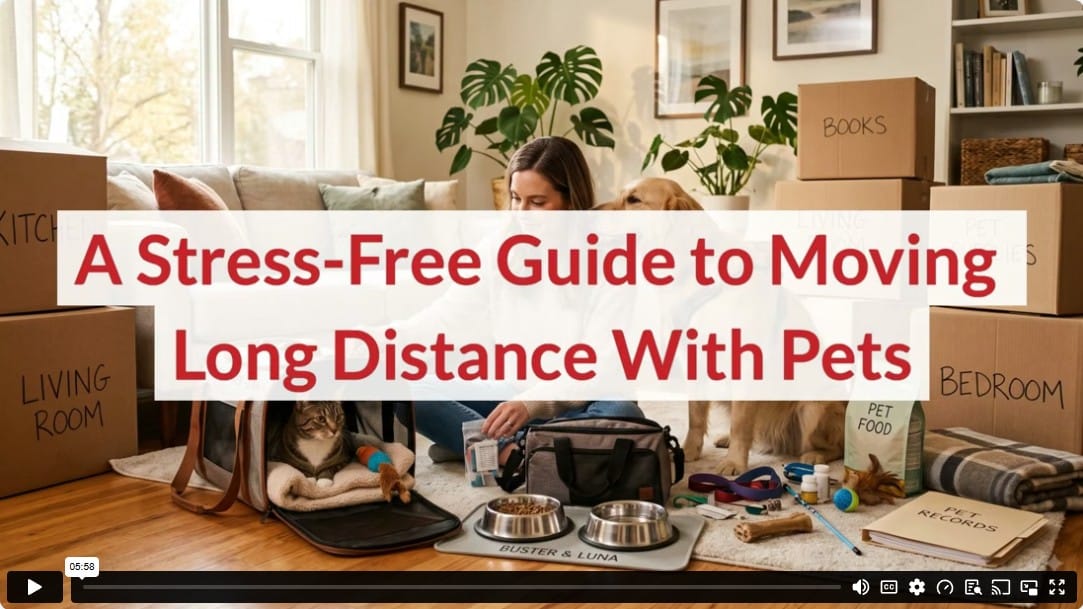
Moving is stressful enough when you’re only responsible for yourself. Add a dog who doesn’t understand why their favorite couch is gone or a cat who has never left the house before, and a long-distance move gets a lot more complicated.
A short move across town gives a pet a chance to recover quickly, since the sights and smells outside are often still familiar. A cross-country move is different. Days on the road, new smells at every stop, and a home that looks and feels nothing like the last one can be disorienting for even the calmest animal.
The good news is that most of what makes a move easier on your pet is simple to do with a little advance planning. Whether you’re handling the logistics yourself or hiring an interstate moving service, pets can’t ask questions or read a moving checklist. That means a lot of the planning falls on you.
Here’s how to move long distance with pets while keeping the trip as smooth as possible for everyone involved.
Update ID Tags and Microchip Information Before You Go
Before you do anything else, make sure your pet’s collar tag and microchip information are current. They should include your new address and a phone number that will work after the move. A pet that slips out at a rest stop or in an unfamiliar new home has a much better chance of getting back to you if their information is accurate.
Do this early, not the week of the move. Microchip registries can take a few days to update, and it’s one less thing to remember when moving day actually arrives. It’s also worth taking a current photo of your pet on your phone. That way, you have it just in case you ever need it to make a lost pet flyer or send it to a local shelter along your route.
Visit the Vet Before a Long-Distance Move
Schedule a checkup with your veterinarian a few weeks before you leave. Ask for a copy of your pet’s medical records and vaccination history, since some states or new veterinary offices will ask for this when you arrive. If your pet takes regular medication, make sure you have enough to last through the move and the first few weeks afterward, in case it takes time to find a new vet nearby.
This is also a good time to ask your vet about anything specific to your pet, such as whether a calming aid makes sense for a long car ride or flight. Every pet handles travel differently, and your vet knows your pet’s history best. If you’re moving to a state with different regulations around pet travel, your vet’s office can usually tell you what paperwork, if any, you’ll need to bring along.
Keep Familiar Items Accessible During Transit
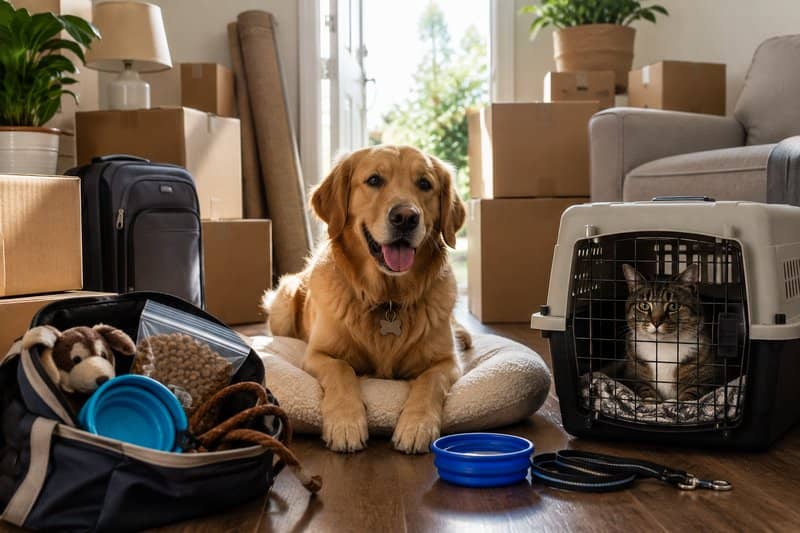
Pack a separate bag for your pet that stays with you rather than getting loaded onto the moving truck. This bag should include:
- Food
- Water
- Bowls
- A leash
- A bed
- Waste bags or a litter box
- A favorite toy
- Anything else your pet uses daily
Familiar smells and objects can help a pet feel more settled during a trip that’s already full of unfamiliar sounds and stops.
If you’re driving, keep your pet’s crate or carrier set up the same way it usually is at home rather than packing it away until the last minute. A moving truck full of unfamiliar boxes is confusing enough without your pet’s usual space disappearing, too.
If you’re flying instead of driving, check your airline’s specific requirements for pet carriers well ahead of time, since rules on size and documentation vary and aren’t always easy to sort out at the last minute.
Plan for Pet-Friendly Stops and Overnight Stays
If your move involves more than a few hours of driving, plan your route around stops and hotels that allow pets. Remember to book ahead rather than hoping you’ll find something along the way.
Look for rest areas with grass and shade for breaks. Avoid leaving your pet alone in a parked car, even for a few minutes, since temperatures inside a car can become dangerous much faster than most people expect.
Build extra time into your schedule for these stops. A long-distance move already has a lot of moving parts, and rushing through a bathroom or food break for your pet adds stress for everyone in the car. It also helps to feed your pet a lighter meal a few hours before a long stretch of driving, since a full stomach combined with motion can make some pets carsick.
If you’re hiring a moving company, look at the top-rated long-distance movers so your timeline is as short and firm as possible. Knowing when your belongings will arrive can make it easier to plan your pet’s transition and reduce stress while you’re settling into your new home.
Prepare Your Pet for the New Home
When you arrive, set up one quiet room with your pet’s food, water, and bed before you let them explore the rest of the house. A house full of boxes and unfamiliar smells can be overwhelming. Giving your pet a smaller, familiar space to start in makes the transition easier than turning them loose in a house they’ve never seen.
Introduce the rest of the house gradually, room by room, once your pet seems comfortable rather than confined to that first quiet space.
Keep an eye on your pet in the new yard or neighborhood for the first few weeks. Cats in particular can try to find their way back to a previous home if they get outside before they’ve fully adjusted. And even a well-trained dog may react differently to new sounds, smells, and neighbors.
Keep Routines as Normal as Possible
Pets pick up on stress and disruption even when they don’t understand what’s happening. Keep feeding times, walks, and playtime as close to normal as possible during the days before and after the move. That routine gives your pet something familiar to hold onto while everything else changes around them.
This matters just as much for you as it does for your pet. A few minutes spent on a normal walk or a familiar bedtime routine can be a welcome break from the chaos of unpacking boxes and settling into a new place.
Settling In Together
A long-distance move is a big adjustment for a pet who has no say in the decision. With some advance planning around their health records, their comfort during the trip, your chosen moving company, and a calm introduction to the new home, most pets settle in faster than their owners expect.
The days right after a move tend to be the hardest, for pets and people alike. Boxes are everywhere, schedules are off, and everyone is a little more tired than usual. Giving your pet extra patience during that stretch, along with the routines they already know, goes a long way toward making the new house feel like home for both of you.
Video