

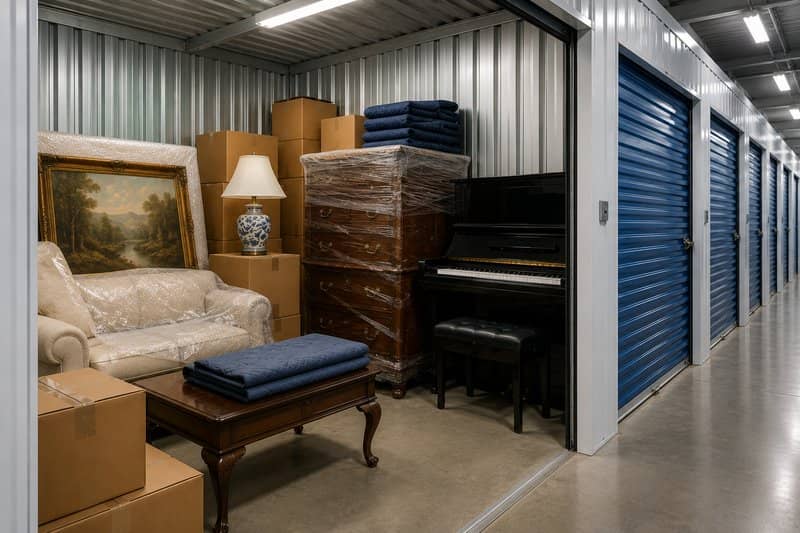
Not every move goes in a straight line from one front door to another. Sometimes your new home isn’t ready yet. Sometimes you’re downsizing and need somewhere to keep things for a while. Whatever the reason, if your belongings need to sit in storage at any point during a long-distance move, the type of storage you choose has a bigger impact than most people realize.
It’s easy to assume that storage is storage, as long as the door locks and the roof doesn’t leak. And for some items, the type of storage doesn’t make much difference. But for others, the specific conditions inside that unit can make the difference between belongings that arrive in the same shape they left in and ones that arrive warped or destroyed.
Some long-distance moving and storage companies offer climate-controlled storage to protect your items. Climate-controlled storage costs more than a standard unit, so it helps to know when it’s actually worth paying for and when a regular unit will do the job just fine. Here’s how to decide.
When Your Move Includes a Storage Gap Between Homes
A long-distance move rarely lines up perfectly. Closing dates shift, new construction runs behind schedule, and sometimes you need to leave one home before the next one is ready. Any time your belongings will sit in storage for even a few weeks between pickup and delivery, it’s worth asking what kind of storage that gap actually involves.
A standard storage unit is exposed to whatever the local weather is doing outside. That might mean a hot, humid summer or a freezing winter, depending on where your things are sitting. Climate-controlled storage keeps the space within a steady temperature and humidity range regardless of the season. That can make all the difference for many of your items.
When You’re Storing Items Sensitive to Temperature or Humidity
Some belongings hold up fine in a standard storage unit. Others don’t.
Wood furniture can warp, crack, or develop mold if humidity swings too far in either direction. Electronics, musical instruments, artwork, and leather items are also sensitive to extreme temperatures and moisture. Worse, you may not even notice any changes until the damage is already irreversible.
Paper goods and photographs belong on this list, too. Old photo albums, documents, and books can grow brittle in dry heat or develop mildew in damp conditions. Neither problem is something you can fix once it starts.
You should strongly consider climate-controlled storage if your move includes:
- A piano
- Artwork
- Antique furniture
- An instrument collection
- Expensive electronics
- Other fragile, old, or high-value items
In these cases, climate-controlled storage is usually worth the extra cost. These are the items most likely to come out of storage looking or performing differently than when they went in. And the damage is often the kind that can’t be reversed.
When Your Move Crosses Very Different Climates
A move from a humid coastal city to a dry inland state, or from a mild climate to one with extreme summers or winters, adds another layer to think about. Even if your items will only be in storage briefly, the local climate at the storage facility itself can play a part, especially during peak summer or winter months when temperatures and humidity swing to their extremes.
If your move crosses very different regions of the country, ask your long-distance moving company where your things will actually be stored. Also ask what the conditions are like there during the time of year you’re moving. A storage unit without climate control in the middle of a heat wave or a deep freeze is not a safe environment just because your belongings are indoors.
When Storage Will Last More Than a Few Weeks
The longer your items sit in storage, the more that storage environment has an effect on them. In most cases, a week or two in a standard unit is unlikely to cause much harm to most items. Several months is a different story, especially through a full change of seasons where the unit swings from summer heat to winter cold and back again.
You may experience a delayed home purchase, a temporary relocation, or a gap between jobs. Regardless of the reason, if you know storage will be part of your move for an extended period, it’s worth budgeting for climate control from the start rather than moving items later. Switching a piece of furniture into climate control after it’s already been damaged doesn’t undo the damage. It only stops things from getting worse.
Making the Right Call for Your Belongings
Climate-controlled storage isn’t necessary for every move, but it’s a huge benefit once wood, electronics, artwork, or anything sensitive to temperature and humidity is involved. The safest approach includes thinking through what you’re storing, how long it will sit, and what climate it will pass through before deciding whether the extra cost is worth it.
At the end of the day, the extra investment in climate-controlled storage is one you won’t regret making. Keeping your priceless items and treasured heirlooms safe from damage is not only worth the cost, but it’s also helpful in taking one less worry off your plate when you’re moving long distance.