

Moving from Florida to North Carolina puts you in a completely different environment. Depending on where you land, your new home could look like a beach town, a historic college city, or a mountain-ringed valley with beautiful fall colors. North Carolina packs three distinct landscapes into one state. Figuring out which one fits you best is a big part of picturing life after the move.
This guide walks through the coast, the Piedmont, and the mountains, plus the biggest everyday shift for a lot of Florida transplants: the return of actual seasons.
The Coast: More Familiar Than You’d Expect
North Carolina’s coast is the easiest landing spot to picture for anyone not ready to give up beach life. Towns like Wilmington, the Outer Banks, and the smaller barrier island communities give you the sand and humidity that will feel recognizable coming from Florida. Fishing, boating, and beach walks are a part of daily life here in a way they won’t be further inland.
The smaller details are where you’ll find the differences. Hurricane season runs on a similar calendar to Florida’s, but the coastline itself is shaped differently. Barrier islands, sounds, and marshland create a more layered geography than a straight stretch of beach. Winters on the coast are noticeably cooler than Florida’s, though still mild compared to the rest of the state. A light jacket becomes a regular part of your routine, but shoveling snow isn’t something coastal residents typically deal with.
The Piedmont: North Carolina’s Everyday Middle
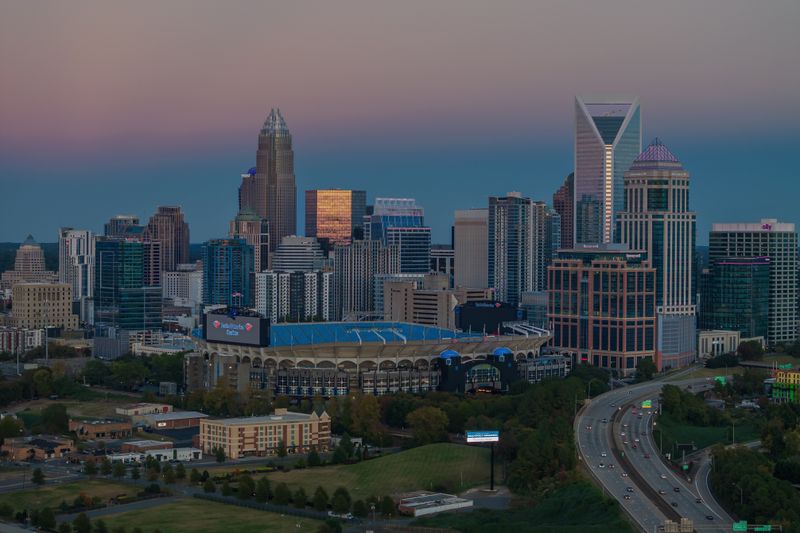
Move inland and you hit the Piedmont, the rolling middle section of the state that includes Charlotte, Raleigh, Durham, and Greensboro. This is where most of the state’s population and job growth are concentrated. For a lot of Florida movers, it ends up being the most practical landing point.
The terrain here is gently hilly rather than flat, which could be quite the adjustment after years on Florida’s level ground. Summers are warm and humid, closer to a Florida summer than you might expect, so the adjustment on that front is minor.
Where the Piedmont stands apart is the arrival of an actual autumn: cooler nights come earlier than they would on the coast, and leaves change color by mid-fall in neighborhoods across Charlotte and the Triangle. Winter typically brings a handful of cold snaps and the occasional light snow, not like the sustained cold you’d find further west.
City life here includes college sports culture, a growing food and brewery scene, and a mix of newer transplants that make it easy to settle in.
The Mountains: Different Elevation, Different Climate
Head west and the landscape changes again. The Blue Ridge and Great Smoky Mountains bring towns like Asheville, Boone, and Hendersonville, where elevation plays the biggest role in reshaping daily life.
Gaining a few thousand feet within the same state can mean a ten-to-fifteen-degree temperature swing compared to the Piedmont on any given day. Summers are noticeably cooler and less humid, which is part of what draws people looking to escape Florida heat altogether.
Winters bring brisk cold and regular snowfall, along with foggy and icy mountain roads. Anyone who has never driven in snow will want to build that skill before their first winter here. It’s a vastly different driving experience than anything you’d find in Florida.
Daily life in the mountains leans outdoorsy: hiking trails, waterfalls, and small-town main streets replace the beach as the default weekend plan. The pace tends to be slower and the towns smaller than what you’d find in the Piedmont’s growing cities.
Real Seasons Are Back
For anyone who has spent years in Florida, the return of four distinct seasons is often the biggest daily-life adjustment, more so than any single region’s quirks. Fall means color-changing leaves and cooler evenings across most of the state. It shows up on the coast too, just later and more mildly than in the mountains. Winter brings at least some cold weather everywhere you land, even at the beach, and a “White Christmas” becomes a real possibility the further inland and higher up you go.
These seasons could be something charming to picture (or intimidating, depending on your mindset), but they’ll also affect your life in practical ways that you may not think about until you’re there.
You’ll need a winter coat throughout the season, not just for the odd winter vacation. Snow tires or chains are a necessity in the mountains. A wardrobe built on layers replaces one built on a consistent temperature nine months a year.
None of this is a reason for concern; it’s simply a different rhythm than the one you’re used to. Most transplants find they enjoy having four seasons again once they’ve adjusted their closet and their expectations.
How Elevation Changes the Picture Within One State
The most useful thing to understand about a Florida-to-North-Carolina move is that “North Carolina weather” isn’t one answer. A single winter storm can bring rain to the coast, a cold snap with light snow to the Piedmont, and a foot of snow to the mountains, all on the same day. Elevation more than latitude drives those differences within the state’s borders.
This is something to consider when picking a location. A move that stays close to the familiar Florida climate would point toward the coast. A change of pace with real seasons but nothing too extreme points toward the Piedmont. Dramatic scenery paired with a substantially different climate, snow included, points toward the mountains.
None of the three is a wrong answer. They’re just different trades, and they’re highly dependent on personal preference.
What a Typical Week Looks Like in Each Region
Picturing an ordinary week can help make the decision clearer.
On the coast, a typical week still revolves around water: an evening walk on the beach, a weekend fishing trip, humidity that feels familiar. In the Piedmont, a typical week looks more like city life anywhere: a commute, a local coffee shop, a college football Saturday, with fall and winter weather bookending the year. In the mountains, a typical week consists of trails and small-town errands, with cooler air and closer neighbors than a bigger city offers.
It also helps to visit each region in more than one season before committing, if your timeline allows it. A coastal town in July feels almost identical to Florida, but that same town in January tells a very different story. The Piedmont’s fall color and the mountains’ snowfall are easy to romanticize from a distance, but they’re something you should experience firsthand before you decide where the moving truck ultimately stops.
How Your Landing Spot Shapes Moving Day
Picking a region settles more than your weekend plans. It also shapes the move itself. Movers price long-distance moves mainly on the weight of your shipment and the miles it travels. Beyond those two factors, where you land in North Carolina affects the cost for long-distance movers in a few specific ways, mostly tied to access and timing at your new address.
On the Coast
Many barrier island and waterfront homes sit on pilings to stay above flood levels. That adds a full flight of stairs to every trip between the truck and your front door. Narrow island roads, bridge crossings, and homeowners’ association rules about truck parking can all stretch out unloading time. Hurricane season also overlaps with the busiest stretch of the moving calendar, so give yourself a little flexibility around your delivery window.
In the Piedmont
Suburban homes around Charlotte and Raleigh tend to be the simplest to unload, with driveways and wide streets that fit a full-size moving truck. Downtown apartments and condos take more coordination. Elevator reservations and long carries from the nearest parking spot add labor time, and labor time shows up in your total. Mention these details during your estimate so your quote reflects them from the start.
In the Mountains
Steep, winding roads and long gravel driveways can keep a full-size tractor-trailer from reaching your home. In those cases, many movers use a shuttle, which is a smaller truck that carries your belongings between the main truck and your front door. That extra transfer adds labor to the job. Ask your mover early whether your address will need a shuttle so the cost appears in your quote instead of on delivery day.
Winter snow and ice can also slow down travel on mountain roads, which makes late spring and early fall a smoother window for many mountain moves.
Whichever region you choose, a detailed walk-through of both your starting home and your new home gives you the most accurate quote. Share photos of your new property’s driveway, stairs, and street access with your mover ahead of time. The more your mover knows about your North Carolina address, the fewer surprises you’ll face when the truck pulls up.
Picturing Where You’ll Land
Every region of North Carolina offers a different version of life after Florida, and there’s no wrong answer among the three. What matters is matching the landscape and the seasons to what you actually want out of the move. That could be staying close to the beach, settling into a growing city, or trading flat ground for mountain views.
Spend some time thinking through an ordinary Tuesday in each setting, and the right region for your move usually becomes clear well before moving day arrives.
Once you’ve picked your spot, Colonial Van Lines can help you get there. Our moving coordinators build every quote around the details of both homes, from your Florida driveway to your new North Carolina street. Reach out for a free quote, and we’ll help you plan a move that fits the region you chose.