
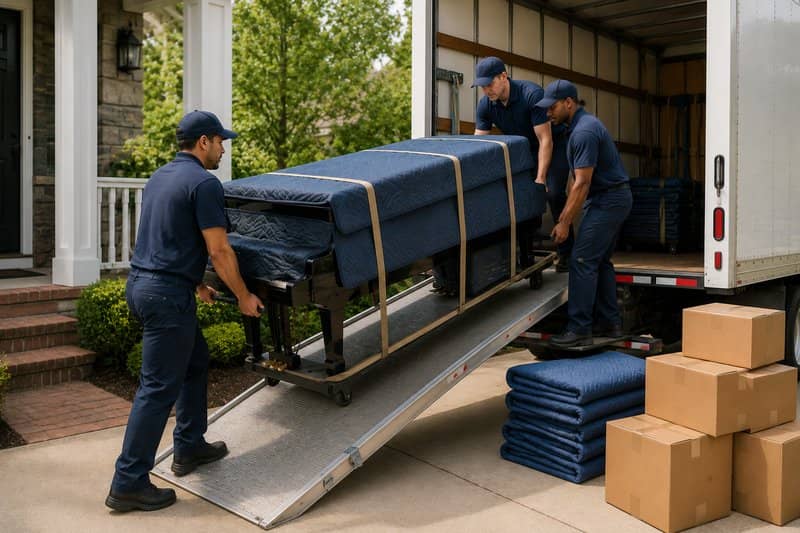
Everyone loves having a piano in the home, but no one thinks about the difficulty of moving it. It’s heavy and awkward to carry, but the fact that it’s often worth more than most of the other furniture in your home combined means it requires a lot of planning for moving. It takes more than just tossing a blanket over it and hoping for the best.
Whether it’s an upright that has been in the family for years or a grand piano you play every day, your piano deserves more attention than the rest of your boxes. A move of a few dozen miles is one thing. A cross-country trip adds climate changes, longer transit times, and more chances for something to shift along the way.
The good news is that moving a piano long distance doesn’t have to be stressful if you know what to expect. Whether you do it yourself or hire full-service cross-country movers, knowing more about the process will give you peace of mind.
Decide Early Whether To Hire Help
The first decision is also the most important one: will you move the piano yourself, or will you bring in people who do this for a living?
A piano can weigh anywhere from a few hundred pounds to over half a ton, depending on the type, and most of that weight sits in awkward places that shift as the piano tips. This makes the process very different from moving a heavy dresser or a bookshelf.
A dresser that gets bumped against a doorframe might get a scratch. A piano that gets dropped, tipped too far, or handled without the right technique can suffer damage that costs far more to repair than the move itself. In some cases, the damage isn’t obvious until you try to play it weeks later.
If you have any doubt about handling the weight and balance safely, this is the item to hire help for, even if you’re moving everything else yourself.
Cost is a fair concern here, and it’s worth weighing against what you’re protecting. A piano is often one of the more expensive and sentimental items in a home, so the price of professional handling for that one piece is usually small compared to the risk of doing it yourself to save money and damaging it in the process.
Measure the Piano and the Path Before Moving Day
Before anyone lifts anything, you’ll need to do some measuring. First, measure the piano itself. Then, measure every doorway, hallway, staircase, and turn it needs to pass through at both the old home and the new one.
Remember, pianos are taller and deeper than they look. A piano that fits through a doorway on the way in doesn’t always fit the same way on the way out if the angle of approach is even slightly different.
Write these measurements down and walk the actual path with a tape measure rather than guessing from memory. A tight stairwell or a sharp turn in a hallway can turn a simple move into a real problem on moving day if nobody checked it in advance.
Use the Right Equipment, Not Just Furniture Dollies
A piano needs specific equipment to move safely. A standard furniture dolly usually isn’t enough on its own. Upright pianos typically need a piano board or skid board that the instrument can be strapped to. Grand pianos need their legs removed and the body wrapped and secured to a specialized board built for that shape.
Straps, moving blankets, and a dolly meant for the piano’s actual weight are all vital. A dolly built for stacking boxes was never designed to carry several hundred pounds of concentrated weight down a ramp or across gravel. Using the wrong equipment is one of the most common ways a piano gets damaged before it even leaves the driveway.
This is the part of the process where professional movers earn their fee. They already own the right equipment and know how to use it instead of improvising with straps and blankets meant for a couch.
Protect the Piano From Temperature and Humidity Swings
A piano is built from wood, felt, and metal. All three respond to temperature and humidity in different ways. A move that spans multiple climates, such as a humid coast to a dry inland state, can affect how the piano sounds even if it arrives without a scratch. Wood can expand or contract slightly, while felt can loosen or tighten, both of which change how the keys and pedals respond.
If the piano will sit in a truck or storage unit for more than a day or two, ask whether that space is climate controlled. A piano left in extreme heat or cold for an extended period, including a hot truck sitting in a parking lot for a weekend, is more likely to need adjustment once it settles into its new home.
Secure the Piano Properly Inside the Truck
Once the piano is loaded, the way it’s positioned and secured inside the truck is just as important as the way it was carried out the door. A piano that isn’t strapped down firmly can shift during hundreds of miles of highway driving, which puts stress on the legs, the case, and the internal parts.
Professional interstate movers typically load a piano near the front of the truck where there’s less movement. Then, they secure it with straps anchored to the truck’s frame rather than to other furniture. If you’re renting a truck yourself, plan to give the piano this kind of priority placement rather than working it in wherever space allows.
Give It Time to Settle Before Tuning
A piano needs time to adjust to its new environment before it makes sense to have it tuned. Wood and felt respond slowly to a new climate, and tuning too soon often means paying for a second tuning once the piano finishes settling in.
Most piano technicians recommend waiting a few weeks after a long-distance move before scheduling a tuning. Wait longer if the new home has a noticeably different climate than the old one. It’s a small bit of patience that can save you from paying twice for the same service.
Moving a Piano the Right Way
A piano is one of those items where the extra care is worth it. The equipment, technique, and experience needed to move one safely across the country are different from what it takes to move the rest of your home. And the risk of getting it wrong is higher than with almost anything else you own.
At Colonial Van Lines, our crews are trained to handle pianos and other high-value items with the crating and care they need for a long-distance move. If a piano is part of your upcoming move, get a free quote from Colonial Van Lines and let a trained crew handle the part of the move you can’t afford to get wrong.