
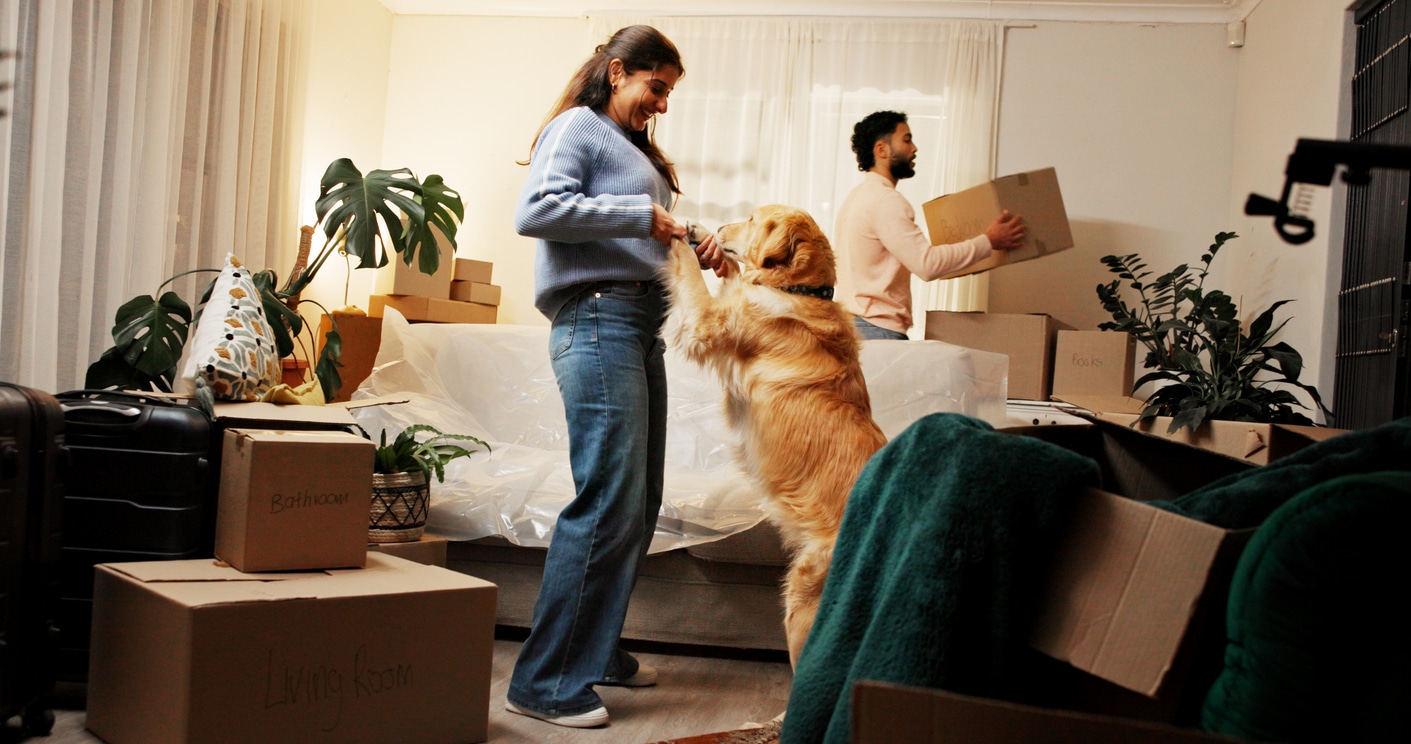
Even the most organized move can rattle pets. New sounds, unfamiliar scents, and a disrupted routine can leave them anxious and unsure of what’s happening. But with a little preparation, moving with pets can be a calmer experience for everyone involved.
The more you understand how to move with pets, the easier it becomes to protect their sense of safety — and your peace of mind. In this guide, we’ll walk you through the steps of moving with your cat or dog — from how to prepare ahead of time to settling them into your new home — so you can all start your new chapter on the right foot.

Before the Move: How to Prepare for Moving with Pets
Is moving stressful for dogs? Moving is often stressful for dogs — and cats, too! According to The Washington Post, even pets with normally calm dispositions can display signs of stress during a move. This can manifest in them hiding, vocalizing, or becoming clingier than usual.
Your furry friends are a lot like you, too. Stress rises during times of change, but early preparation helps minimize those effects. Whether you’re moving out of state or just down the block, a little empathy, structure, and preparation now can go a long way in making your move far less overwhelming for both of you.
Follow these steps to make sure your furry ones are ready for the transition ahead:
Talk to Your Vet Early
Schedule a veterinary visit at least a few weeks before moving day. This gives you time to update vaccines, refill prescriptions, and ask about anxiety management or motion sickness support during the move.
For long-distance moves, you may also need a health certificate. Most airlines require a Health and Acclimation certificate signed by a licensed veterinarian within 10 days of your travel date.
Certain states will have their own requirements, too. For instance, if you’re moving with a dog to California, you’ll not only need a health certificate but also a rabies vaccination certificate, whether you’re flying or not. Make sure you research the state you’re moving to and consult with your veterinarian about the necessary paperwork.
Choose the Safest Travel Option
When moving with pets, how you travel will depend on the distance, your pet’s size, and both your and their comfort levels.
Car travel works best for most pets, giving you flexibility for bathroom breaks and feeding schedules.
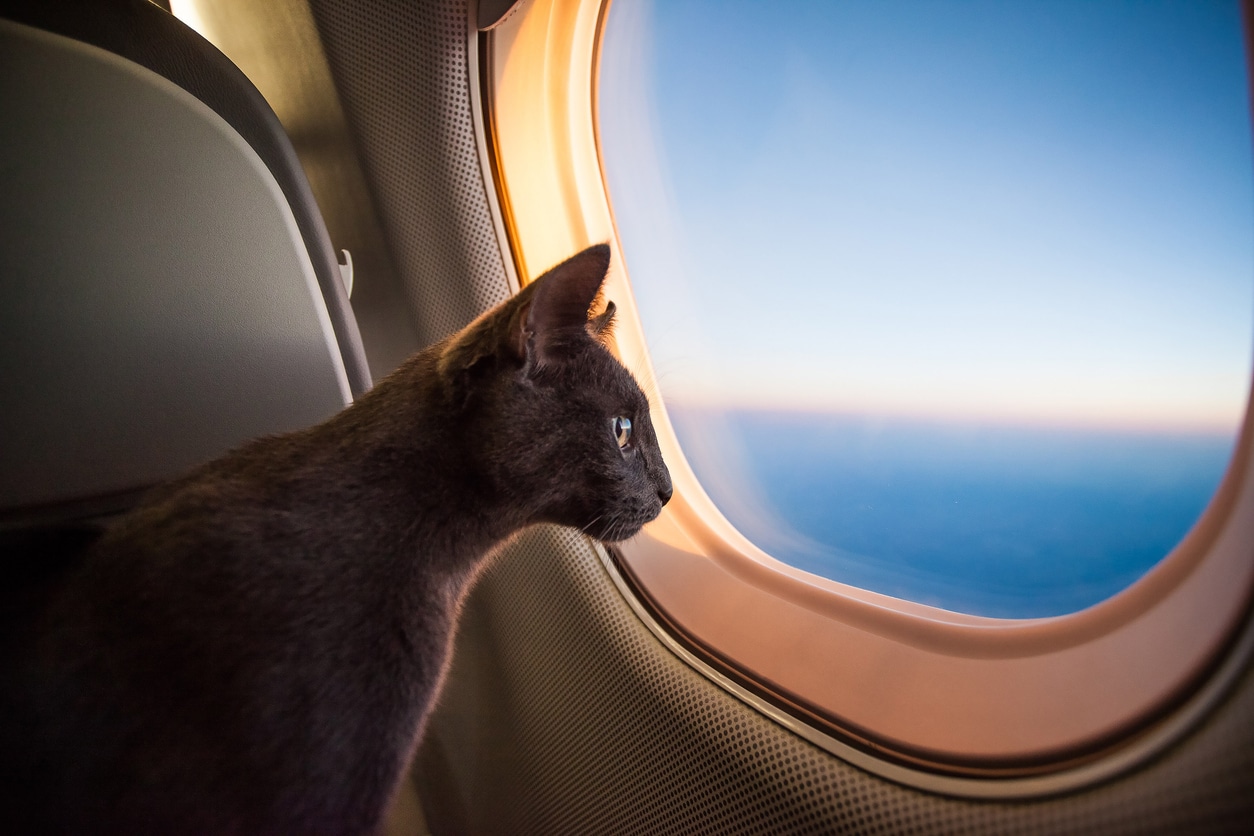
Air travel may be unavoidable for cross-country moves, but requires research — especially regarding breed restrictions, temperature limits, and carrier dimensions.
Pet transport services can also be an option for families moving long distances or internationally.
If you’re driving, find pet-friendly hotels and plan rest stops (every few hours) ahead of time. This will reduce surprises and keep your pet’s comfort front and center.
Update Identification and Microchip Info
Even calm pets can get spooked by open doors and the madness of moving day and may try to escape the commotion. Just in case, before the move, confirm their ID tag lists your new address and current cell phone number.
If your pet is microchipped, update your contact details. Keep a printed copy of your pet’s vaccination and microchip information in your travel bag for quick access.
Introduce Carriers and Crates Early
Don’t wait until moving day to bring out the crate. Set it up in your living room or another familiar area weeks in advance. Place a favorite blanket or toy inside and reward calm behavior with treats.
This slow, positive introduction turns the crate from a source of stress into a place of safety.
Keep Their Routine Steady
Your pet will notice the change in rhythm and scents as you start buying, selling, and packing away familiar items. Consistent mealtimes, walks, and bedtimes can help them feel secure.
For dogs, steady routines keep energy and anxiety manageable. If you’re moving with a cat, routine is a must. Even minor disruptions can cause behavioral issues. Try to pack their essentials last and keep their spaces (e.g., food bowls, bed, litter box) stable until the very end.
Pro Tip: Planning a move? Utilize our moving checklist so you don’t miss a step. |

During the Move: How to Move with Pets
Moving day might feel chaotic for humans, but it’s downright confusing for animals. Between open doors, new sounds, and unfamiliar faces, your pet’s sense of security can quickly unravel before the travel part even begins.
Keeping your pets safe and comfortable during a move takes structure and awareness. The goal is to keep things as stable and stress-free as possible, especially on travel day. Here are some helpful tips on how to move long-distance with pets:
Set Up a Safe Space on Moving Day
Before the movers arrive, designate a closed-off room for your pets. Include their bed, food and water bowls, and favorite toys. Keep the door shut and let movers know that the area is off-limits until you’re ready to leave.
If you can’t set up a room solely for your pets, still make a plan to keep them safe and away from the moving frenzy. Cats should stay in their carriers once furniture starts moving, while dogs may feel more at ease in a crate or behind a pet gate. This prevents escapes and gives them a sense of control in a rapidly changing environment.
Plan and Organize Travel Day
Wondering how to physically move long-distance with pets? Whether you’re driving or flying, some pre-planning to keep your pets safe and calm on the road (or in the air) will be well worth your time. Here are some tips to minimize stress on travel days:
Use a well-ventilated carrier for small animals, or a comfortable and secure harness for larger dogs (attach their harness to a seatbelt).
Pack a travel kit with food, water, treats, and waste bags.
Stick to regular feeding schedules to keep pets comfortable.
If you’re driving:
Take breaks every 2–3 hours, if possible, for bathroom stops and short walks.
Keep car temperatures moderate and windows only slightly open. If you’re moving during warmer months, tap into these summer moving tips.
Use pet-friendly hotels for overnight stays — apps like BringFido or GoPetFriendly make it easy to find them.
If you’re flying:
Confirm the airline’s pet policy early and check breed restrictions.
Opt for direct flights if possible.
Cabin travel is ideal when allowed, but if pets must travel in cargo, ensure it’s in a temperature-controlled, pressurized hold.
Watch for Signs of Stress During Travel
Moving pets cross-country will often trigger anxiety. Watch for warning signs in your pets, such as:
Heavy panting or drooling
Pacing or trembling
Whining, barking, or excessive meowing
Refusing food or water
Hiding or attempting to escape
If you notice these behaviors, offer comfort through scent, such as a blanket or shirt that smells like home. Speak in a steady tone and avoid scolding. If you’re driving, pulling over for a short break can help, too.
Remember, your calm energy helps them feel safe, even in motion.
Overwhelmed by moving? These moving day tips will help your process go as smoothly as possible. |
After the Move: How to Settle In After Moving with Pets
Once you arrive in your new home, your pet’s world changes overnight. There are new smells, new spaces — and no familiar landmarks. In all likelihood, they’ll feel extremely unsettled.
That’s why the days right after moving with pets are just as important as the ones before it.
Taking time to re-establish comfort and routine can help them feel secure again.
Create a Safe Room First
Before you start unpacking boxes, give your pets one quiet, secure room to call their own. Place their bed, water, toys, and litter box (for cats) or crate (for dogs) inside. Keep doors and windows closed so they can’t slip out while movers unload.
Let them explore this smaller space first. It acts as a buffer zone where they can decompress before being introduced to the rest of the home. Once furniture is set and traffic slows down, gradually open access to new rooms.
If you’re planning a summer or winter move, pay attention to temperature changes and drafts. Make sure the room is warm and insulated enough for your pets’ comfort.
Introduce Them to the New Home Slowly
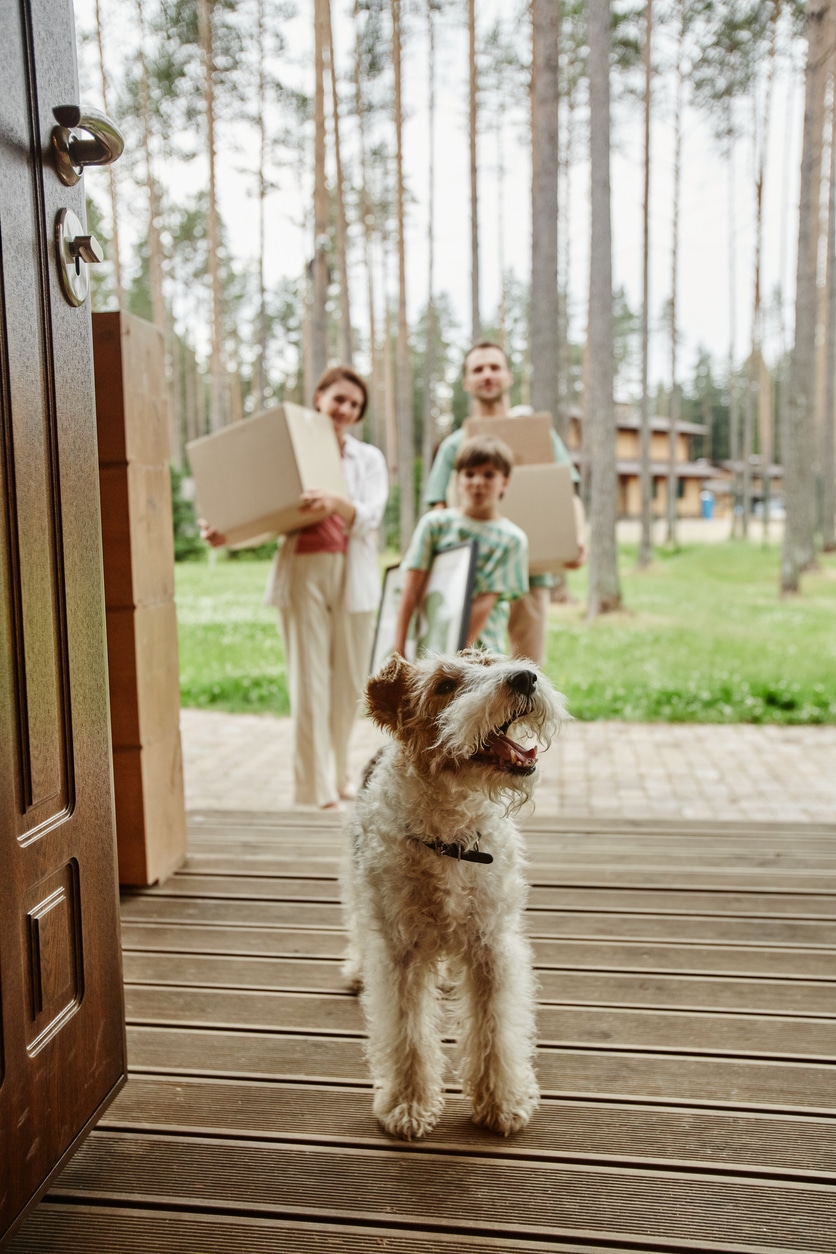
Once your pet is comfortable in their new room, let them explore one new area at a time, always supervised. For cats, move their litter box slowly toward its permanent location so they don’t lose track of it. For dogs, leash them on early tours of the yard or neighborhood to prevent bolting if startled.
Reward calm exploration with treats or praise. The goal is to help them connect these new spaces with safety and positivity.
Rebuild Familiar Routines
Routines give animals structure and comfort. Stick closely to their established feeding, walking, and bedtime schedules. Use the same bowls, bedding, and toys they had before the move, and establish a designated spot for those items early on. If you’ve crossed time zones, adjust mealtimes gradually over several days.
The more predictable life feels, the faster your pets will relax into their new surroundings.
Stay Home More Often During the First Week
If possible, spend extra time at home during those first few days. Pets feel safest when they can see and hear you in the new space.
For dogs, short walks and play sessions around the neighborhood help build positive associations. Cats may need several days before they’re comfortable roaming freely.
Once your pet seems settled — eating normally, sleeping through the night, showing curiosity — you can resume your regular routine.
Watch for Adjustment Issues
Some pets take longer to adapt. Signs of lingering stress after moving with pets include hiding, whining, refusing food, or inappropriate elimination.
If symptoms last more than a week or two, talk to your vet. Mild anxiety is common, but persistent distress could indicate that your pet needs extra support — such as pheromone diffusers, behavior therapy, or or anti-anxiety solutions.
Plan the Rest of Your Move with Ease
Moving with pets takes planning, patience, and care. But it's worth every step when the boxes are unpacked and your pets are settled. With the proper preparation and support, you can make the process smoother for everyone involved.
When it’s time to handle the rest of your move, Colonial Van Lines is here to help. For over 50 years, we’ve helped families complete long-distance moves safely and efficiently. Our full-service movers take care of packing, loading, transportation, and delivery so you can focus on helping your pets feel at home again. Get your free moving quote today!