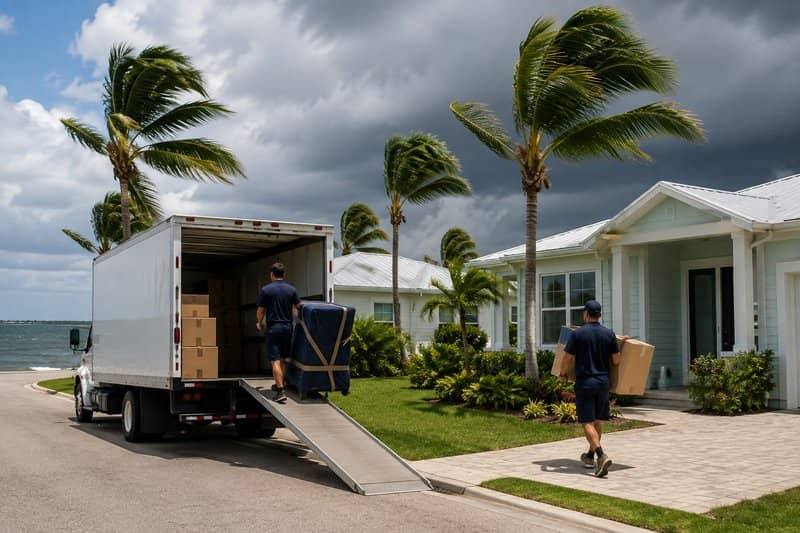
Relocating from California to Florida is a popular cross-country move, and summer is a common time to do it. Plenty of these moves land somewhere in hurricane season, which is roughly June through November. That timing isn’t a reason to worry, but it’s definitely something to plan around.
A little preparation on the Florida end goes a long way. Here’s what hurricane season means for your delivery timeline, and how to keep your move on track even if weather shifts the schedule.
1. Know the Season, Not Just the Date
Hurricane season runs from June through November, so any move landing in that window is worth planning with a bit of extra flexibility. This doesn’t mean storms are likely to affect your specific move. Most moves during these months arrive exactly on schedule.
Hurricane activity tends to build gradually across the season, with August through October typically being busier than June or November. If your move date has any flexibility at all, scheduling toward either edge of the season can mean a slightly calmer stretch of weather to plan around. If not, don’t worry: a well-prepared move works at any point in the window.
What this really means is that weather can occasionally affect a delivery window, the same way traffic or road construction might on any long-distance drive. Knowing the season ahead of time lets you plan for that possibility instead of being caught off guard by it.
2. Build Flexibility Into Your Move Dates
If your move falls during hurricane season, build a few extra days of flexibility into your plans where you can. A delivery window with some breathing room is far less stressful than one tied to a single fixed day.
This is most important when your move depends on timing, like a lease start date or a hotel booking on the Florida end. Where possible, avoid scheduling your new home’s move-in day for the exact day your truck is due to arrive. A one- to two-day buffer gives everyone room to adjust if a storm does move through the region.
It also helps to have a simple backup plan in mind, like a short-term hotel stay or a friend’s spare room, in case your delivery date shifts by a day or two. Having that plan sketched out ahead of time turns a possible delay into a minor inconvenience rather than a scramble.
3. Stay in Close Contact With Your Mover
Communication is what makes a storm-season move manageable. A good moving coordinator tracks weather along your route and keeps you updated well before it becomes a problem, not after.
Ask upfront how your mover handles communication during hurricane season:
- Who is your point of contact?
- How often will you hear from them?
- What does the process look like if a delivery date needs to change?
The best California-to-Florida movers will be able to answer these questions clearly and honestly. Asking them before you book ensures you have a mover who has handled this season before.
Behind the scenes, this usually means a mover has options if weather affects a planned route. They may adjust timing, reroute around a system, or briefly hold a shipment in a safe location until conditions clear. None of that needs to be your problem to manage. It just needs to be something your mover already 1) knows how to do, and 2) tells you about as it happens.
Imagine your coordinator calls two days before your scheduled delivery to say a hurricane is moving through the region and your arrival will be pushed back a day. That single call is the difference between a manageable adjustment and a stressful surprise. It’s a small example, but it’s the kind of proactive update that should come standard with any long-distance mover.
4. Prepare Your Florida Home for a Flexible Arrival
A little destination-side prep makes any delivery change easy to handle. Confirm the basics with your new home or building ahead of time:
- Access details: Gate codes, parking arrangements, and any building move-in policies or reserved elevator times.
- A point of contact: A property manager or landlord’s number, in case your arrival window needs to shift by a day.
- A short essentials bag: A few days of clothes, medications, chargers, and important documents. These should be packed separately from the rest of your belongings, the way you would do for air travel.
None of this takes long to put together, but when a delayed arrival happens, it makes the difference between a minor scheduling adjustment and a logistics nightmare.
If added peace of mind matters to you, ask your mover about valuation coverage options for the trip. It’s a straightforward way to feel confident about your belongings during storm season or any other time of year. It’s also worth asking about before your items are loaded rather than after.
5. Choose the Right Mover
A cross-country move already involves a lot of moving parts. Add hurricane season into the mix, and the long-distance mover you choose has an even bigger impact on your move’s success.
Comparing communication style and route experience, not just price, is how you find the best movers for a storm season move. You want a moving crew who you know will handle your belongings with care. You want a team that will keep you informed from pickup through delivery. That way, weather updates come from an experienced professional, not a vague guess.
That kind of steady communication is what turns a hurricane season move from a source of stress into a manageable, well-planned relocation.
Plan the Season, Not the Storm
A move to Florida during hurricane season is very manageable with the right planning and a mover who keeps you in the loop. Know the season, build in some flexibility, prepare your new home for a possible shift in arrival, and lean on your mover’s communication to keep things on track.
Video
Infographic
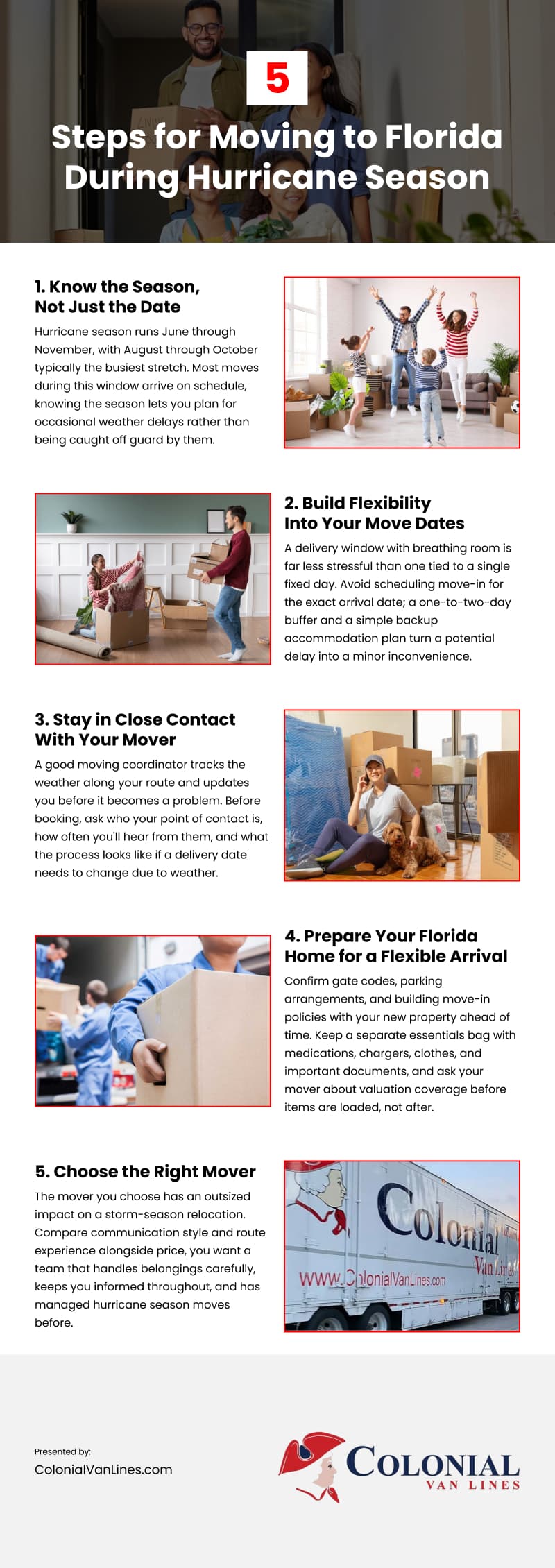
Moving to Florida during hurricane season is more manageable than most people expect, with the right preparation, weather rarely derails a well-planned cross-country relocation. Check out the steps for moving to Florida during hurricane season in this infographic.