
While many things nowadays are meant to be cheap and dispensable, some items in your home just aren’t replaceable. A painting passed down through your family, an antique dresser with a history behind it, or a sculpture you bought on a trip you’ll never repeat can’t be repurchased if something goes wrong.
Moving these pieces across the country calls for a different level of care than packing up the rest of the house.
The distance makes this harder, not easier. A move of a few hundred miles is one thing, but a cross-country trip means more time in transit, more changes in climate, and more handling along the way. Every extra hour on the road and every extra set of hands involved is another chance for something delicate to shift or take on damage.
Fortunately, hiring full-service long-distance movers and knowing the process gives your irreplaceable items the best chance at staying safe during your move. Here’s what actually protects fine art, antiques, and other high-value items on a long-distance move.
Take Inventory and Document Everything First
Before anything gets wrapped or boxed, walk through your home and make a list of every high-value item you own, including its condition. Take clear photos from multiple angles. Note any existing scratches, cracks, or wear so there’s a record of what the piece looked like before it left your house.
This step feels tedious, but it matters more than almost anything else on this list. If a question ever comes up about whether damage happened during the move or was already there, your photos and notes are the difference between a quick resolution and a drawn-out argument.
This is especially true for antiques, where a small chip or a hairline crack can be easy to miss if nobody looked closely beforehand. Spend an afternoon on this well before moving day, not the morning of.
Use Packing Materials Specifically Made for the Item
A painting, a marble sculpture, and an antique mirror all need different kinds of protection. Treating them the same way is one of the most common mistakes people make.
A painting needs a rigid frame around the canvas so nothing presses against the surface. A mirror or a piece of glass needs padding on both sides and should never lie flat under other items. A delicate antique with carved detail needs padding tucked into every curve, not just a single layer of wrapping.
Regular moving blankets and standard boxes are fine for most of your home, but they weren’t designed with fragile, irregular, or unusually heavy pieces in mind. Buying or renting the right materials for each item type takes more effort upfront, but it’s far cheaper than repairing or replacing something that arrives damaged.
Ask About Custom Crating for Irreplaceable Pieces
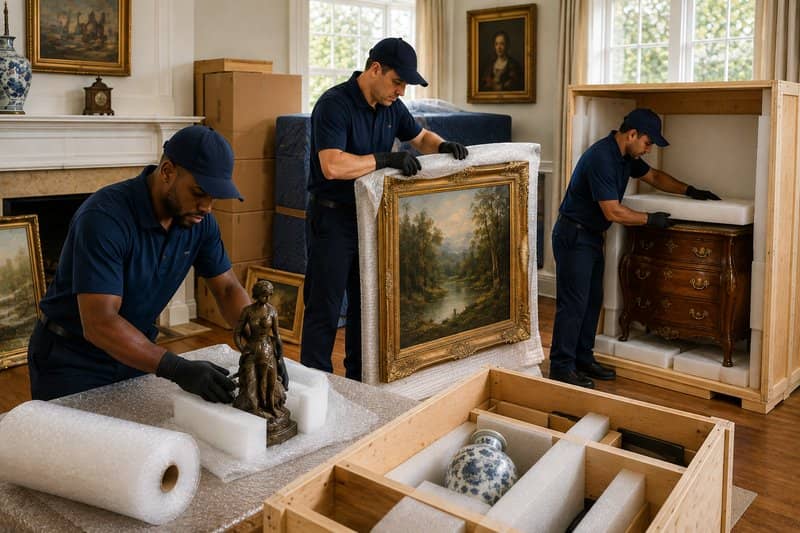
For your most valuable or fragile items, a standard box isn’t enough. Custom crating means building a wooden crate to the exact shape and size of the piece, with padding inside that keeps it from shifting during hundreds of miles of driving.
This is common for large paintings, sculptures, and antiques with delicate joints or carvings. These unique shapes wouldn’t survive being wrapped and stacked with other boxes.
Not every mover offers this service, and among those that do, the quality varies quite a bit. Some companies build crates on the spot using basic plywood and foam, while others have a dedicated process for measuring the piece, building the crate to fit, and testing to make sure nothing shifts before it ever leaves your home.
When you’re looking at different long-range moving companies, ask to see examples of crates they’ve built before. Also ask how they’ll handle your specific piece rather than accepting a generic answer about “wrapping it carefully.” A mover with real experience in this area will have a clear, specific process to walk you through.
Understand How Protection Works Before You Sign Anything
Every mover is required to offer some baseline coverage for your belongings, but that baseline usually falls far short of what a valuable painting or antique is actually worth. If you’re moving items with real financial or sentimental value, ask directly what additional protection is available and what it would take to fully cover a piece if something happened to it.
This conversation is easiest to have before moving day, not on the day of or after. Ask what documentation you need to provide, such as an appraisal or a receipt, and get the answer in writing. A mover who handles high-value items regularly will expect this question and should be able to answer it clearly and quickly.
Control Temperature and Humidity During Transit
Fine art and antiques are more sensitive to their environment than most furniture. Wood can warp or crack with sudden humidity changes, canvas can loosen or tighten, and certain finishes can be damaged by extreme heat. A move that spans different climates, such as a humid coast to a dry inland region, puts these items at more risk than a short move across town.
If your items will spend more than a day in a truck or in storage, ask specifically whether that space is climate controlled. This is one detail that’s easy to overlook when comparing movers on price alone. But it often matters more than almost anything else for a piece that has already survived decades or generations.
Plan for Careful Loading, Transport, and Unloading
The way an item is carried, positioned, and secured inside the truck is just as important as the way it was packed. Fragile and high-value pieces should be loaded last, positioned where they’ll experience the least movement, and secured so they can’t shift or tip during the drive. They should also come off the truck first, before anything else is unloaded around them, so they spend as little time as possible sitting under other boxes or furniture.
Ask your mover how they typically load these kinds of items and whether the same crew handles the piece from start to finish. Each handoff between people or trucks is another moment where a piece could be bumped or set down carelessly. Fewer hands touching a fragile item generally means fewer chances for something to go wrong along the way.
Protecting What Can’t Be Replaced
If you own any items with high monetary or sentimental value, choose a moving company with crews that are trained to handle fine art, antiques, and other high-value pieces. The company you hire should offer custom crating and climate-controlled options built for exactly this kind of move.
Fine art, antiques, and other high-value items deserve more attention than the rest of your move. The extra planning is worth it. The right company’s expertise and materials, your documentation, and a clear understanding of protection and coverage all work together to bring these pieces to your new home the way they left the old one.