

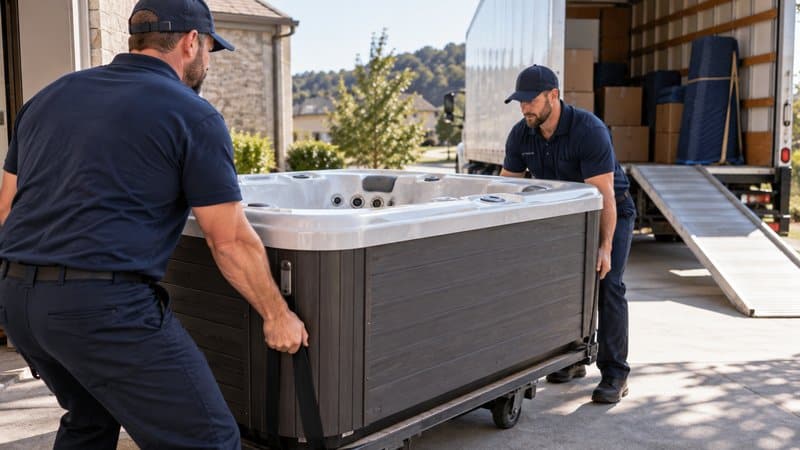
A hot tub and a pool table have one thing in common: neither one was built to be picked up and carried through a doorway. Both are heavy, awkward, and expensive to replace if something goes wrong halfway through a long-distance move.
The good news is that both items follow a fairly predictable process once you know what that actually involves. Here’s how to move a hot tub and a pool table for a long-distance move, plus when it’s worth it to hire full-service cross-country movers.
Why Hot Tubs and Pool Tables Need Special Handling
Both items weigh far more than they look like they should. A hot tub carries several hundred pounds of shell, frame, and equipment even before you add water. A pool table’s slate playing surface alone can weigh as much as a full-grown adult, sometimes more.
Both items are also awkward rather than simply heavy. A hot tub rarely fits through a standard doorway without tilting at an angle that puts heavy strain on the people carrying it. A pool table has to come apart into several pieces before it can move through a house at all.
The most common damage on both items comes from skipping preparation, not from the move itself. Leftover water in a hot tub’s plumbing can breed mold or even freeze and crack a line in cold weather. A pool table moved in one piece, or with its slate stacked improperly, will almost certainly arrive with a crack straight through the playing surface.
How To Prepare a Hot Tub for the Move
1. Drain It
Before taking your hot tub apart, you’ll need to drain it. Plan the drain for at least a day or two before the movers arrive. This gives the shell and plumbing time to dry out completely. It also gives you time to check local rules on draining chemically treated water, since many areas have guidelines on where that water can go.
Drain the hot tub completely before moving day. This includes the pump, heater, and plumbing lines, not just the main basin. Use a wet or dry vacuum to clear any water left in the jets and lines, since a little leftover water is exactly what leads to freeze damage or mildew during a multi-day transit.
2. Disconnect It
Turn off the power at the breaker and have an electrician disconnect a hardwired unit rather than pulling on cables yourself. Hot tubs are often wired directly into a home’s electrical panel, and disconnecting one isn’t something you should just guess your way through.
3. Take It Apart
Remove the cover, steps, and any accessories. Pack them separately from the shell itself. These pieces are lighter and easier to damage than the tub body, and taking them apart means they don’t need to travel wrapped around something several times their weight.
4. Pack It Safely
Wrap the shell in moving blankets and keep it upright during transport, the same way it sits when it’s in use. A hot tub laid on its side puts pressure on parts of the shell that were never built to bear that kind of weight.
How To Prepare a Pool Table for the Move
1. Document It While Put Together
Photograph the table before you touch it, including how the rails line up and where any leveling shims sit underneath the frame. These pictures turn reassembly in your new home into a matter of matching what you see instead of guessing at how everything used to fit.
2. Take It Apart and Pack It
Remove the rails first, and label each one along with the pockets that came with it. Rails are bolted on individually, and pieces that look nearly identical at a glance are often sized for one specific side of the table.
Take up the felt carefully once the rails are off. Felt in good condition can often be reused if it comes up without tears or heavy staples. Roll it rather than folding it to avoid creasing the fabric permanently.
Separate the slate into its individual sections and wrap each one flat, never on edge or stacked directly on another piece. Slate is dense and heavy, but it cracks under uneven pressure. A crack in the playing surface is one repair that can’t be hidden or reversed.
Detach the legs and any crossbeams from the frame, and wrap each piece individually. A pool table frame is built to hold enormous weight when fully assembled, but its individual legs and rails are far more vulnerable to chips and scratches once they’re on their own.
Why Professional Movers Are the Best Choice
Moving a hot tub or a pool table safely takes more than extra hands. Both items need equipment like heavy-duty dollies and moving straps rated for several hundred pounds. Most importantly, they require the technique to keep that weight balanced through doorways, hallways, and stairs.
If you want to give your pool table or hot tub the best chance at staying safe through the move, hire top-rated long-distance movers for items like these. This protects your floors, walls, and doorframes from the damage of a heavy and awkward object shifting suddenly. It also protects the people carrying it from a serious injury risk.
Ask about valuation coverage for both items before moving day. A hot tub and a pool table are both big investments. Confirming what’s covered ahead of time is far more useful than finding out during a claim.
Professional crating is absolutely worth asking about for a table’s slate sections specifically. Slate doesn’t flex or absorb shock the way most furniture does, so a custom-built crate offers a level of protection that moving blankets and straps alone can’t match on a long-distance haul.
The key to moving a hot tub or pool table cross-country is planning for the challenges before moving day arrives. Proper disassembly, careful packing, and the right equipment all reduce the risk of damage during a long trip.
Additionally, booking expert moving services with Colonial Van Lines can help protect your difficult-to-move items from pickup through delivery. With our professional crews, you can start playing at your pool table and relaxing in your hot tub soon after arriving at your new home. Reach out today for a free quote.