
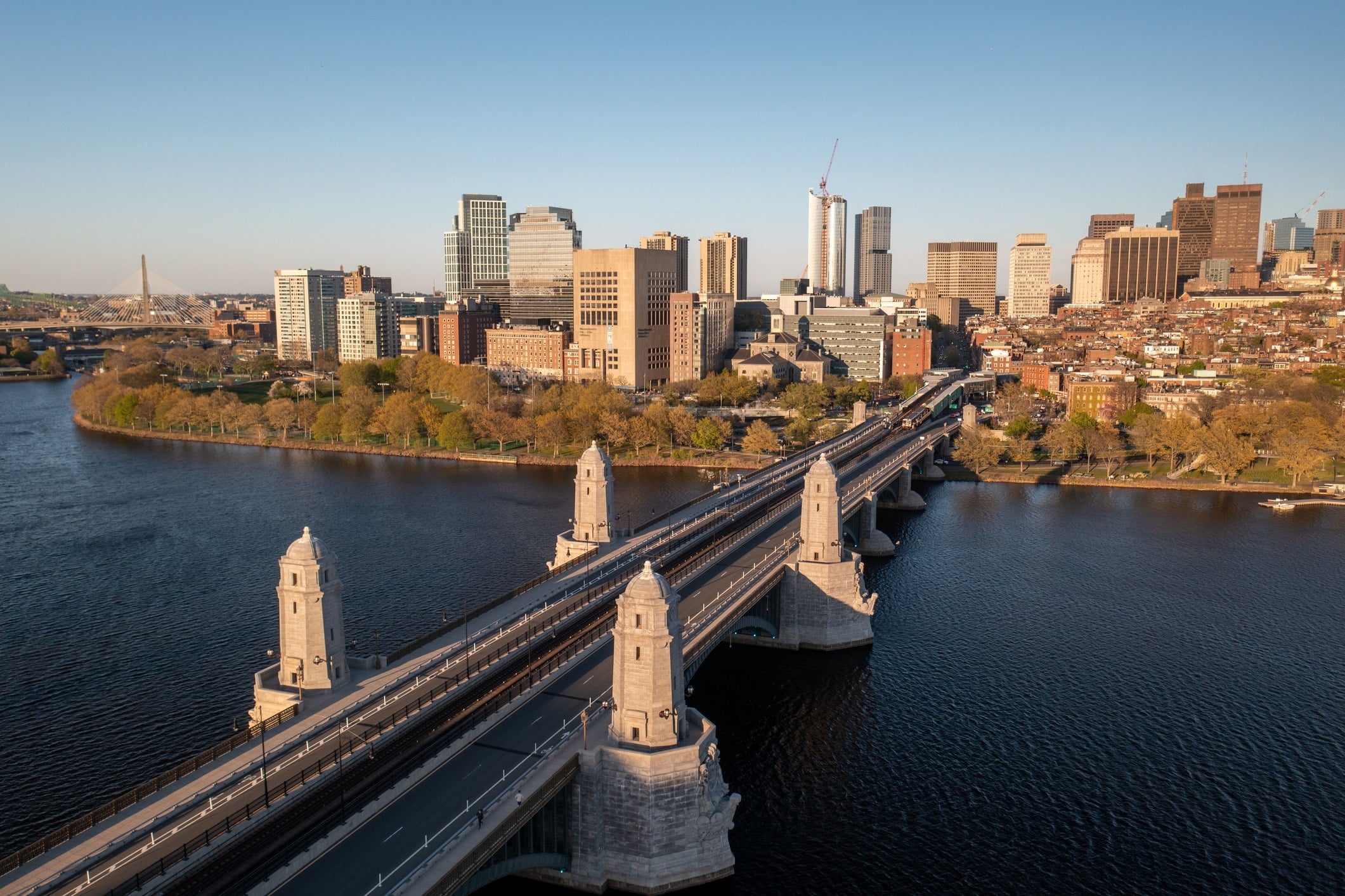
Trading the Big Apple for Beantown? You're in good company. Every year, plenty of New Yorkers make the 215-mile trip up I-95 in search of lower rent, shorter commutes, and a city where you can actually hear yourself think.
Moving from NYC to Boston is a lateral move in some ways and a real lifestyle change in others. This guide will walk you through what to expect — the cost of living in Boston vs. NYC, what the move itself will run you, plus the cultural, logistical, and everyday differences between the two. If you're curious why people leaving New York have been doing it in record numbers, the information below will tell you most of the story.
Moving From NYC to Boston: How Do They Compare?
Before running through your moving checklist, it’s worth getting a glimpse of both cities side by side. The fast facts below will show where Boston and NYC line up — and where the gap is wider than you'd think.
Fast Facts: NYC vs. Boston
NYC | Boston | |
Population | ||
Median Age | ||
Climate | ||
Cost of Living (100is the national average) | ||
Median Home Price | ||
Average Rent |
At a glance, Boston looks like a scaled-down NYC with rougher winters and a slightly cheaper cost of living. Boston also skews younger — the median age is 33 compared to 38 in NYC — likely because the Boston metro has nearly 70 colleges and universities within commuting distance.
There are also some extra pros of living in Boston vs. New York that tend to win people over, including plenty of green space (like the Emerald Necklace), and easy ocean access without a two-hour detour. And here's a fun fact that New Yorkers tend to appreciate: Boston built the first subway in the United States, which opened in 1897. So when you step onto the MBTA's Green Line and it feels a little…vintage… that's because it’s over a hundred years old.
What will you miss coming from New York? Both Boston and New York’s food and nightlife scenes are strong, but as a New Yorker, you’ll probably miss the 24/7 culture, the bottomless restaurant options, and the sheer variety of entertainment you can get in NYC at any time of day.
Cost of Living in Boston vs. NYC
The biggest perk of moving from NYC to Boston: the money you’ll save. Boston is still pricey, but it's measurably cheaper (we’re talking 16–18%) than the cost of living in NYC. The difference in groceries is marginal, but Boston’s gas prices, transit, and housing are all much lower than in NYC. Here are a few more details on the cost of living in Boston vs. NYC to be aware of.
Massachusetts taxes are usually lower
For most people, especially middle-class earners, moving to Massachusetts will mean paying fewer taxes than they were in NYC. New York uses a progressive state income tax that tops out at 10.9%, and NYC piles on its own local income tax ranging from 3.1% to 3.9%.
Massachusetts, on the other hand, uses a flat 5% state income tax with no local city tax on top, which often leaves middle- and upper-middle earners with more take-home pay. And while property tax rates are similar in both states, Mass’s sales tax is also lighter — 6.3% vs. 8.9% in NYC.

Rent and home prices drop once you leave the five boroughs
Average rent in Boston is around $3,500 vs. about $4,100 citywide in NYC. The gap widens even more when you compare Boston to Manhattan specifically, where the average rent is closer to $5,500. Boston's median home price is also just lower than NYC citywide, but at $868,000, it’s well below Manhattan's average of $1.2M.
What salary do I need to live comfortably in Boston?
Everyone’s standard of living is different, but for most people, a salary of $100,000 or so is enough to live well in Boston, especially if you’re single. Most single residents spend around $54,000 to $60,000 a year on the basics — housing, food, power bills, and transportation — which leaves a decent buffer for travel, savings goals, and nights out.
What it means to live "comfortably" is subjective, but a reasonable salary guideline is to double your baseline living expenses so you can cover the essentials plus savings, travel, and occasional Red Sox tickets. So if minimum expenses for a single person land around $60,000, you’ll probably want to make closer to $120,000 to really live comfortably in Boston. If you have kids or a spouse who relies on your income, you’ll likely need to make more.
Ready to make the move to Boston? Get a fast, free quote from Colonial. |
Living in Boston vs. NYC: Other Considerations
Money is only half the equation when choosing where to move. Here are some other things to prepare for when living in Boston vs. NYC.

Winters in Boston are longer and snowier than in NYC
Boston gets about 43.8 inches of snow in an average year, while NYC gets only 29.8 — so be prepared for winters to hit harder than you’re used to. Winter in Boston also stretches from late October into early April, and the windchill coming off the harbor is no joke. On the bright side, Boston summers are pleasant and run a little drier than NYC summers. Still, make sure to invest in a real winter coat before your first December in Boston — you’ll be glad you did.
Boston shuts down earlier than you're used to
This is the one that catches every New Yorker: Most Boston bars close by 2 a.m., and MBTA subway service generally ends by 1 a.m. (or earlier). So, if late-night dim sum is your religion, expect to rely more on Ubers — and to have fewer choices after hours.
Crime rates in both cities are comparable, with some nuances
Both Boston and New York City rank as relatively safe for their size. Massachusetts has one of the lowest property crime rates in the country, and per AreaVibes, the two cities have relatively similar violent crime rates — but Boston is a bit safer overall.
You can usually get by without a car in Boston
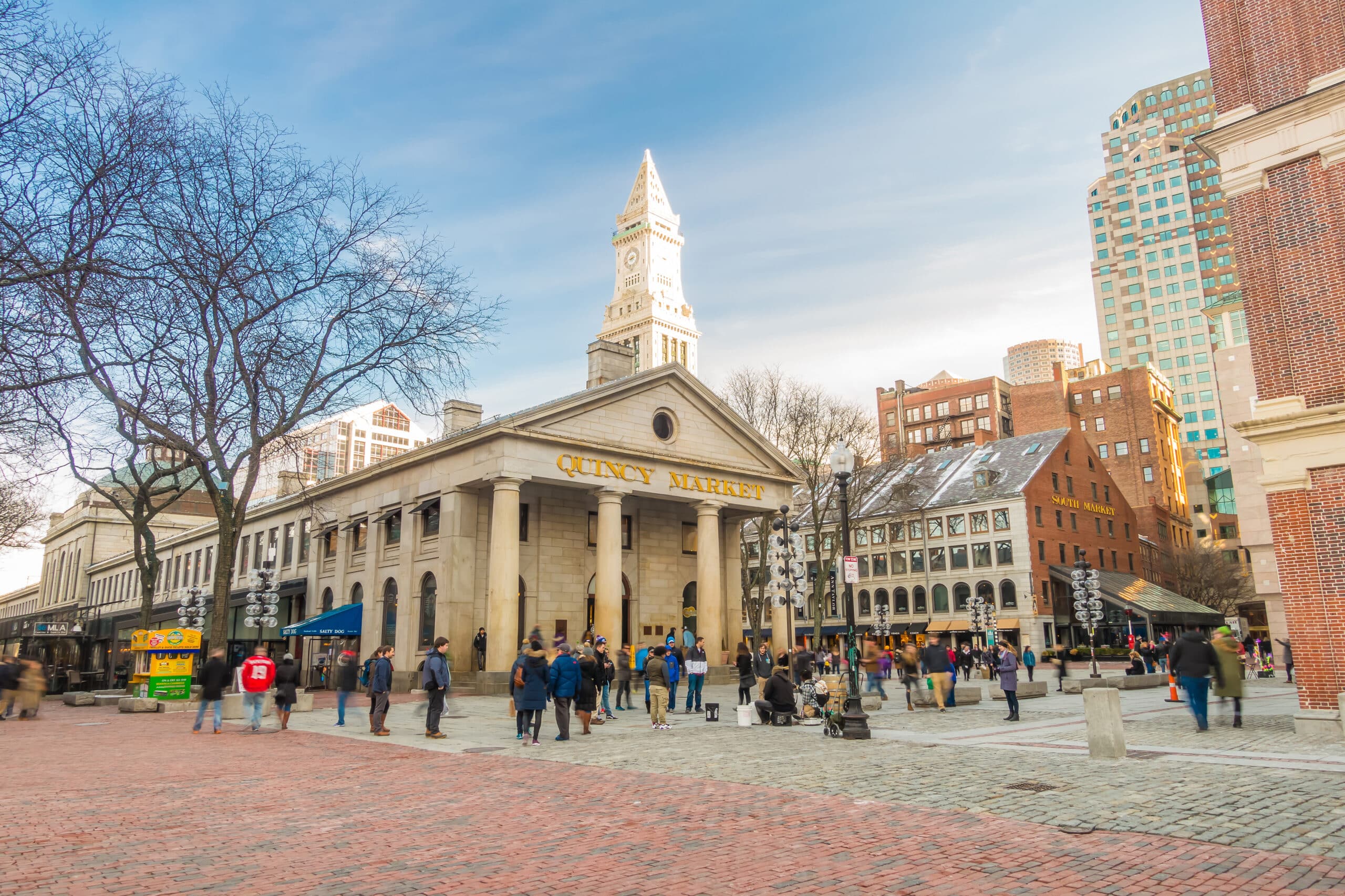
The MBTA (Massachusetts Bay Transportation Authority) covers most of Boston, and the city is more walkable than people give it credit for — you can cross Downtown in about 30 minutes on foot. That said, Boston’s buses and trains aren't as frequent as NYC's subway, and if you plan to regularly explore beyond I-95, owning a car when you move to Boston may start to make sense.
The best neighborhoods in Boston depend on what you liked about NYC
No matter your vibe, there’s a place in the greater Boston area for every type of NYC transplant. Here are a few of the best neighborhoods in the city.
Back Bay: The closest match to Manhattan's Upper East Side (think: brownstones, high-end shopping, and yes, steep rent)
South End: Trendy and restaurant-heavy, with a young crowd and a West Village feel
Dorchester: Artsy, diverse, and still relatively affordable compared to other parts of the city
Seaport: Comparable to mini-Hudson Yards, with new, luxury high-rises and plenty of tech offices
Still trying to decide exactly where to settle down? Check out our guide to the Best Neighborhoods in Boston for our top picks! |

While not New York, there are still plenty of things to do in Boston
True, Boston is not New York in terms of scale, but it’s still a large city with a lot to offer. You've got the Freedom Trail, Fenway Park, the Esplanade running along the Charles, and ferries out to the Harbor Islands — all without leaving city limits. The live music scene also punches well above the city's size, the food scene is top-notch, and four pro sports teams keep the fanbase buzzing year-round. Museums are fewer in number than NYC, but the MFA, ICA, and Isabella Stewart Gardner all earn their world-class reputations.
Is it better to live in Boston or NYC?
Whether it's better to live in Boston or NYC comes down to what matters most to you. While it’s tough to compete with the scale and energy of New York, most people leaving NYC find Boston delivers a better quality of life at a lower price. Check out our full guide to moving to Boston for a deeper look at aspects like the job market, schools, and commutes.
The Cost of Moving From NYC to Boston
Boston may be more affordable than NYC — which is a great reason to relocate — but what will the move itself cost you?
Generally, you can expect to pay $3,100–$4,100 for full-service movers for a two-bedroom home when moving from NYC to Boston. That said, your actual total cost will depend on three main factors: how much stuff you're bringing, when you're moving, and which service you choose.
One Boston-specific wrinkle: you may need a moving truck permit. A one-day permit for two non-metered parking spaces costs $69 through the City of Boston; metered spaces run an additional $40. Permits aren't legally required everywhere, but in dense neighborhoods like the North End, Back Bay, South End, and Beacon Hill, they're the only reliable way to guarantee your truck has legal curb space on move day.
Top Options for Moving From NYC to Boston
You've got two realistic options when moving from NYC to Boston: going the DIY route or hiring full-service movers.
DIY with a rental truck
With a DIY move, you rent a truck, drive it yourself, and handle loading and unloading on your own. This is the cheapest option on paper.
The downsides: you're driving a huge truck through NYC traffic, across three states, and into Boston's narrow, brownstone-lined streets. You may also be responsible for fuel, tolls, and other unexpected costs. And since you’ll take on all of the lifting, if anything breaks, it's on you.
Full-service movers
Full-service movers handle everything on your behalf: loading, transportation, and unloading, with optional packing, furniture disassembly, and unpacking add-ons. Interstate movers are also federally required to provide released value protection, with optional full-value coverage available for an additional fee. This covers the current market replacement value of your items should anything get lost or damaged.
For a route like NYC to Boston, choosing a reputable interstate moving company matters. Both cities involve dense urban logistics — COIs, permits, tight elevator windows, and no room for error on the loading dock. Plus, if you’re juggling work or moving more than a small apartment, full-service long-distance moving services are often worth it to ensure you’re not overwhelmed and everything goes smoothly on moving day.
Plan Your Move From NYC to Boston With Confidence
NYC to Boston is one of the most common moves on the East Coast, and good planning can make it feel much more manageable and straightforward. Once you've picked your neighborhood, set your budget, and locked in a timeline, your next step will be choosing the right moving partner.
Colonial Van Lines has extensive experience in long-distance relocations, completing over 12,000 moves each year. Our team of professional movers is specially trained to pack, load, and transport your belongings safely from any NYC borough to your new Boston neighborhood — handling the building COIs, permits, and parking logistics so you don't have to. Get a fast, free moving quote today.