


Americans are still on the move in 2026, but the story isn’t really about the number of people relocating. It’s more about where they’re going and why they’re doing it. Today, people are more likely to make meaningful, lifestyle-driven moves — a trend we’ve seen continue since 2020. And they’re often moving cross-country, leaving big cities for smaller ones, or seeking out affordability, more opportunities, or a better quality of life.
Based on the latest data from the U.S. Census Bureau, roughly 11–12% of Americans move each year. This works out to around 35–40 million people annually when you include all types of moves, both local and long-distance. While intrastate relocations have become more common in the last year, millions of Americans are still making bigger changes, crossing state lines in search of a fresh start somewhere new.
So, where are people moving to in 2026? Using our exclusive moving data at Colonial Van Lines, we’re breaking down the most popular cities and states in the U.S., the top moving routes, and the trends shaping 2026 relocations.
If you’re planning a move this year — or just wondering about the latest relocation trends — you’re in the right place. Let’s explore where Americans are moving to in 2026 and what’s influencing where they choose to call home next.
Where Are People Moving To Now? What Changed from 2025 to 2026
Our latest insights on where most Americans are moving to now haven’t changed too drastically between 2025 and 2026, but there are a few 2026 data points worth noting:
Top Relocation Destinations: Building on the moving trends of 2024 and 2025, Texas and Florida continue to be where people are relocating to the most in 2026.
Top 10 Cities Update: Denver has entered the Top 10, replacing Los Angeles.
Top 20 Cities Update: Richmond, VA, has newly entered the top 20 city list.
Top 10 States Update: Pennsylvania has entered the Top 10, replacing Virginia.
Most Popular Cities People Are Moving To in the U.S.
Our Colonial 2025–2026 data on the best places to move in the U.S. shows a strong mix of familiar spots, along with a few minor shifts. Many of these cities continue to rank highly year after year, and evolving preferences seem to suggest people are becoming more selective about what they want from their day-to-day lives — though those priorities vary from person to person.
A few key takeaways from this year’s migration patterns:
Big cities in Texas and Florida are booming right now. Nearly half of the top 20 list comprises cities from these two states, which suggests that low taxes, affordable housing, warm weather, and job growth are the biggest factors that inspire people to book packing and moving services.
Iconic populous cities like Vegas, Chicago, New York, and LA are also still topping the charts. Whether it’s their job markets, entertainment options, or sheer scale of opportunity, these places continue to draw people in — even if costs can be high.
Warmer regions like Atlanta, Phoenix, and Orlando are still very popular. For a lot of these, lower taxes, relatively affordable housing, and steady job growth are also incredibly attractive.
The West remains a major lifestyle magnet. Cities like Denver, Seattle, and Portland are especially appealing to people chasing outdoor access and strong career growth opportunities in tech and remote-friendly industries.
Here are the 20 most popular cities in the U.S. in 2026, based on 2025 moving trends:
Houston, TX
Las Vegas, NV
Chicago, IL
New York, NY
Atlanta, GA
Denver, CO
Charlotte, NC
Austin, TX
Dallas, TX
Phoenix, AZ
Orlando, FL
San Antonio, TX
Jacksonville, FL
Seattle, WA
Los Angeles, CA
Tampa, FL
Portland, OR
Richmond, VA
Raleigh, NC
Miami, FL
Where are Americans Moving To? The Top 10 Most Popular Cities in the U.S. in 2026
As people continue to move in search of better jobs, lower costs, and an overall higher quality of life, a handful of cities keep rising to the top. This section breaks down the top 10 most popular cities in the U.S. and examines what’s driving people there.
1. Houston, TX
Houston continues to be the top U.S. city people are moving to, and it’s easy to see why. When living in Houston, you get a strong job market and a diverse, energetic culture — but without the sky-high prices of nearby Austin and other major metros across the country. With a population of almost 2.4 million and a median age of 34, it’s also a relatively young and fast-growing city.
Houston’s cost of living is below the national average, and at around $264,000, home prices remain more affordable than in many big cities. You also generally get more space — bigger homes and bigger yards — for your money. And yes, Texas still has no state income tax, which continues to appeal to incoming residents.
Jobs are also a major reason people move to Houston. It has more Fortune 500 headquarters than any other city outside of Chicago and New York, and its economy continues to be driven by several big industries, including oil, aerospace, health care, and tech, with heavy hitters like NASA and the Texas Medical Center offering steady, high-paying work.
Outside of work, Houston delivers. The food scene is one of the best in the country — think Tex-Mex, barbecue, and globally influenced spots, including a strong West African presence. Houston also has a solid museum district, major league sports, and a lively nightlife scene.
Downsides? Traffic can be rough, and summers are long, hot, and humid. But for many people, the affordability, job opportunities, and cultural mix more than make up for it.
2. Las Vegas, NV
Las Vegas has always been about reinvention, and that spirit continues to attract newcomers moving long-distance from all over the country. Vegas is still one of the fastest-growing U.S. cities, and the appeal is pretty straightforward: warm weather year-round, no state income tax, solid job growth, and a lower cost of living than many neighboring metros.
The number of people now living in Las Vegas and its greater metro is nearing 2.4 million, with steady migration from California and other high-cost areas. Despite the increase in demand, housing is still pretty attainable — especially for Californians — with average home prices at about $427,000.
Tourism and entertainment still power the Vegas economy — and probably always will — but the city is diversifying. More companies and workers are choosing to base themselves here, thanks to expanding tech, health care, and manufacturing industries in the area.
The desert heat can admittedly be intense, especially in summer, but with easy access to outdoor spots like Red Rock Canyon, a rapidly improving food scene, and nonstop entertainment, a lot of people find the trade-offs of living here completely worth it.
3. Chicago, IL
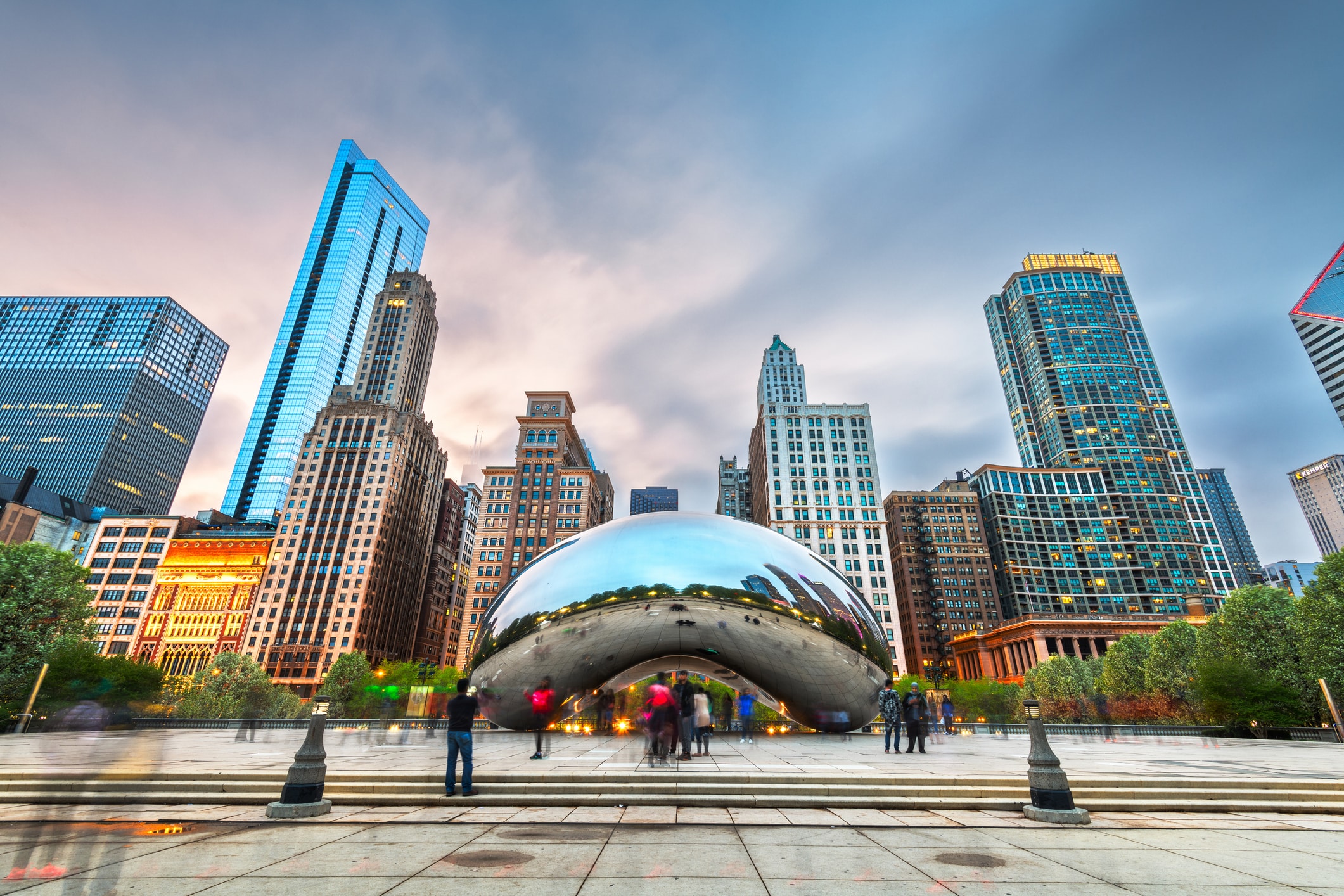
Chicago has the skyline and perks of a global metro, but in classic Midwestern fashion, it tends to feel more welcoming. With the city’s population of 2.7 million and counting, moving to Chicago means you’ll get big-city culture, sports, and career opportunities on par with New York and LA, just at a less aggressive price and pace.
It’s also still relatively affordable for a major U.S. city: median home prices hover around $317,000, depending on the source and neighborhood, though prices have been climbing. The good news is that the job market remains solid, especially in tech, finance, health care, logistics, and manufacturing.
Then, of course, there’s the food. Chicago has always been known for its deep-dish pizza and fully loaded hot dogs, but that’s just the start. Neighborhoods like Pilsen, Chinatown, and Little Italy show off the city’s immigrant roots, while its steakhouses and Michelin-starred spots round out a dining scene that’s as diverse as it is high-end.
4. New York, NY
New York City has always been the city of dreams, where careers are built and opportunities feel endless — that is, as long as you can afford it. With a population just under 8.5 million, NYC remains the largest city in the U.S., and demand is still high despite a migration slowdown compared to previous years.
Make no mistake: trying to buy when moving to NYC is tough. The median home price is over $812,000 — much higher than that in Manhattan — and renting isn’t cheap either. Still, many choose to relocate here for the access to top-tier jobs, schools, and the pace of life you don’t really find anywhere else.
Finance, media, and tech continue to anchor the job market, alongside a steady stream of startups and creative work. Neighborhoods are constantly churning as rising costs push some residents out and bring new ones in. That shift is part of what’s always defined New York — it’s constantly evolving. For many, that’s kind of the point, and the chaos and evolution of NYC is why many still believe it’s one of the best cities to move to.
5. Atlanta, GA
The ATL is still booming. Over 60,000 people are moving to Atlanta each year, drawn by continual job growth in aerospace, tech, health care, and manufacturing — through big players like Microsoft and Google — and a cost of living that’s much easier to stomach than most other big cities.
Home prices have leveled off a little — the median is about $386,000 — and buyers still often get way more space and a better value than in other major metros. Plus, Atlanta’s mix of historic homes and established neighborhoods offers way more character than the typical new-build scene you often see in other places.
Culturally, the city hasn’t missed a beat. While the film and music industry in Atlanta has recently taken a hit, the city continues to be a top destination for production and entertainment. When it comes to sports, the energy is nonstop — Falcons, Braves, Hawks, and Bulldogs fans show up loud, no matter the season. And beyond that, the food scene is thriving, with equal parts Southern comfort and global cuisine.
6. Denver, CO
Denver’s growth has slowed some since its surge from the last few years, but demand certainly hasn’t disappeared. The city itself is home to nearly 730,000 people, and the greater metro area has topped 3 million. People continue to move to Denver for the lifestyle, strong job market, and perhaps most of all, access to the outdoors.
Denver’s homes are still on the higher side — around $540,000 — which can be a challenge for some, but it’s often worth it for those who don’t want to choose between the city and the mountains. Luckily, Denver also has a strong job market with plenty of high-paying jobs. It’s home to a large health and wellness industry, one of the largest aerospace hubs in the U.S., and a growing number of tech startups that appeal heavily to remote workers.
Outside of work, Denver is a perfect mix of urban and outdoorsy. The food scene is steadily evolving beyond its steakhouse reputation, and craft beer is practically mandatory here. Plus, with easy access to hiking, skiing, sports, and live music, it’s not hard to see why people choose to stick around.
7. Charlotte, NC
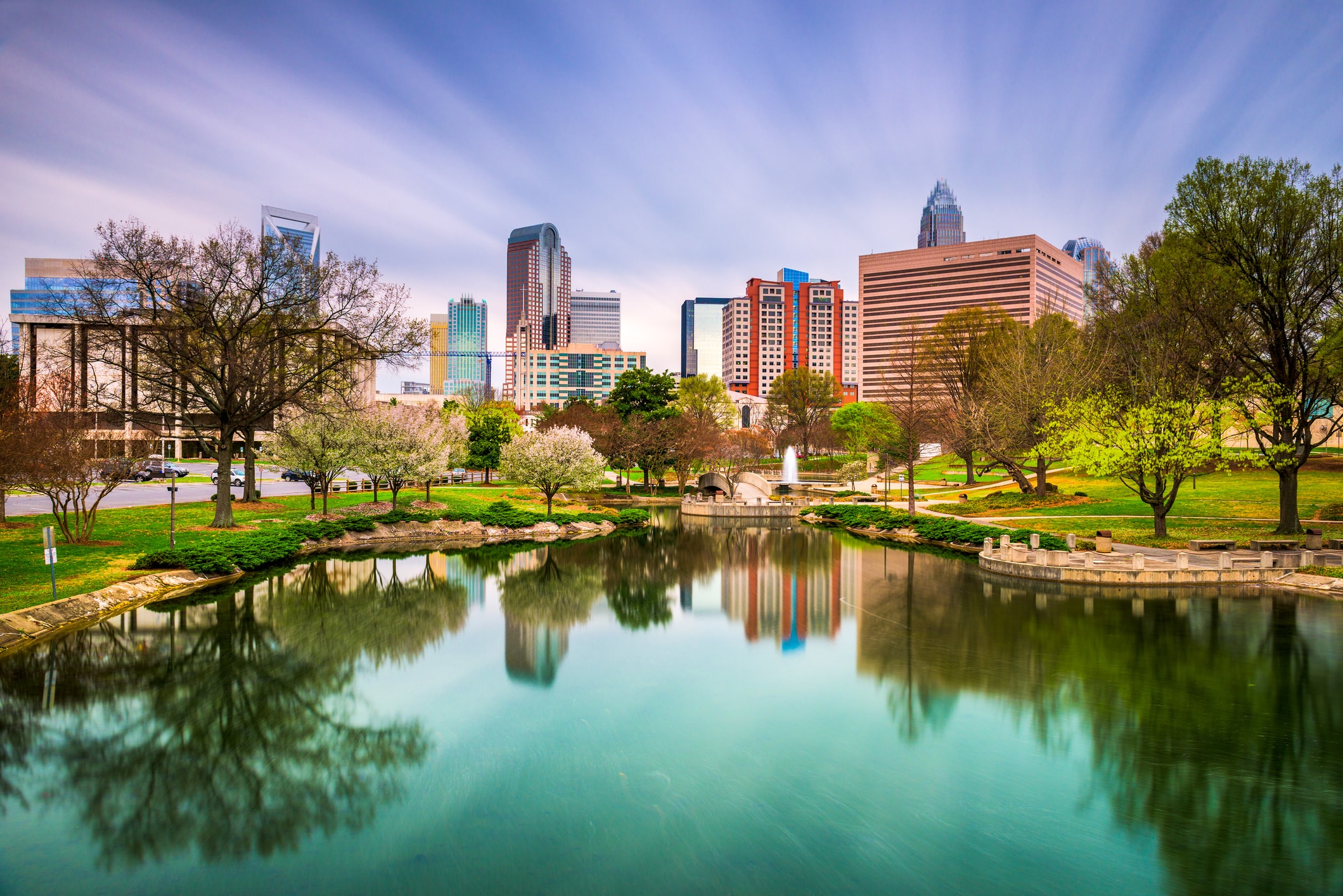
Charlotte’s population has now topped 940,000, and the momentum hasn’t really slowed. It’s still known for dominating the country’s banking industry — second only to NYC — thanks to the presence of large financial institutions like Bank of America and Wells Fargo. It’s also been landing on lists of top U.S. cities for job growth, which makes it an appealing choice for anyone looking to shake things up with a new career move.
Living in Charlotte also still feels relatively affordable, though housing prices have slowly crept up to nearly $400,000. Still, what seems to keep people here is the balance. You get the big-city skyline and big-city job opportunities, but also laid-back neighborhoods, tree-lined streets, and quick getaways to the Blue Ridge Mountains.
On top of that, the Charlotte lifestyle is pretty good, too. Like Denver, the craft beer and food scene is booming, and sports here are a pretty big deal — whether you’re into football, basketball, or NASCAR. Charlotte still has that Southern charm, but at this point, it’s clearly grown into something much bigger than just a banking hub.
8. Austin, TX
Austin was once just a laid-back college town with a notable, funky arts scene. But over the past few years, with the arrival of major companies like Apple, Google, Tesla, and Oracle, it’s now widely regarded as one of the fastest-growing tech hubs in the country. That growth has pushed housing costs up over the last few years, though recently prices have cooled slightly to about $500,000.
Still, living in Austin isn’t exactly cheap — especially for Texas. But even with a higher cost of living, people keep coming — for the jobs, the weather, and the vibe, summed up by its motto, “keeps Austin weird.” Here, you’ll find live music along Sixth Street, food trucks scattered around town, art galleries and museums all over, and major annual events like South by Southwest and Austin City Limits Music Festival.
Some longtime locals believe tech money has dulled Austin’s personality, but it still has a strong, independent streak and remains a place where people come to chase big ideas, whether in a startup, a recording studio, or a barbecue pit.
9. Dallas, TX
The Dallas-Fort Worth metro has now surged past 8.3 million residents, and it’s only getting bigger. A business-friendly climate, no state income tax, and strong industries — think finance, tech, and health care — continue to attract both companies and transplants. Corporate relocations and expansions are a big part of the story here.
The good news for buyers is that housing prices have also dipped — close to an average of $300,000 — and the city still delivers in every way that counts. Dallas blends modern skyscrapers with old-school Texas charm, and its culinary scene goes far beyond Tex-Mex. From high-end dining in Uptown to hole-in-the-wall taco joints in Oak Cliff, there’s something for just about anyone interested in moving to Dallas.
10. Phoenix, AZ
Phoenix is no longer just a landing spot for retirees. Yes, it’s still that — but it’s also a fast-growing metro with expanding industries like aerospace, bioscience, and finance fueling job growth and bringing with it an influx of young professionals, families, and remote workers.
Housing in Phoenix has risen, but with median home prices hovering around $410,000, it’s still much more affordable than places like LA or New York — and you usually get more space, newer homes, and often a pool. Other costs are rising, too, but a steady stream of job opportunities can help offset that.
Summers are intense, no question, but people adjust with early mornings, evenings, and lots of pool time. The trade-off is a long stretch of warm, sunny weather the rest of the year — including mild winters with 60-degree days. For outdoor lovers, moving to Phoenix is also extremely compelling: you’ve got desert hiking and biking trails in every direction, plus mountain parks and preserves right in the metro area. Add in a growing urban scene, and Phoenix hits a rare balance: solid career options, relative affordability, easy access to nature, and a laid-back but evolving city vibe.
For more expert insights on moving industry trends, check out the interview with John Pellitteri, Vice President of Colonial Van Lines, in Move.org's expert interview series. |
States Where People Are Moving To: The Top 10 Most Popular States
What state should you move to? Of course, this will be a different answer for everyone considering leaving their hometown. But, while fewer Americans have been making interstate moves compared to a few years ago, Texas and Florida are a good bet. These two dominate the top 10 list of cities people are moving to, and when you look at overall state-to-state migration, they’re easily still the biggest magnets by a wide margin. Here’s a more detailed look at the top 10 most popular states in the U.S.
1. Florida
For years, it seems everyone has been moving to Florida in record numbers. The state’s population has soared past 23.3 million, which has helped it maintain its reputation as one of the biggest — and still growing — states in the country. The reasons people move there are as steady as its growth: no state income tax, a strong job market, beaches, and warm weather year-round.
That said, the boom has cooled off. Migration into Florida has slowed noticeably compared to the pandemic-era surge, and the state isn’t pulling in new residents at the same pace it was just a few years ago. In fact, some areas are now seeing people leave because the cost of living has gotten too high.
On top of that, hurricanes, development, and heavier traffic are making certain parts of the state more complicated (and expensive) to live in. Even so, while it may no longer be the magnet it was during the early 2020s, it’s still growing more quickly than any other U.S. state — and for many, the math still makes sense: lower taxes and consistent sunshine continue to outweigh the cons.

2. Texas
Texas also continues to be one of the fastest-growing states in the country, adding hundreds of thousands of new residents each year. In fact, its population has surpassed 31 million — though, like Florida, the pace has slowed compared to the migration boom in the early 2020s.
The appeal of moving to Texas often comes down to the cost of living, but that’s far from the only factor. The state’s identity is a big part of the draw — people move there and really lean into that independent, “Texas-first” mindset. The food scene doesn’t hurt either. Between legendary barbecue, Tex-Mex staples, and a rapidly growing mix of international cuisine, cities across the state have become renowned food destinations. Plus, there’s plenty to do in most big cities when it comes to sports, entertainment, live music, and the outdoors.
The summers are hot and humid in many parts of the state, and traffic in the biggest metros can be heavy, but the level of newcomers each year definitely suggests the downsides are worth it.
3. California
Home to about 39.5 million people, California remains the most populous state in the country. For decades, the promise of heading west has drawn people to Cali from across the country — but that story has shifted slightly in recent years.
While California’s resident population is still climbing, hundreds of thousands of residents have also moved out of the state since 2020, largely due to high taxes and housing costs that contribute to its sometimes impossibly high cost of living.
That said, for those who can make it work, relocating to California is still considered one of the most exciting moves you can make. The tech industry in Silicon Valley, the entertainment scene in Los Angeles, and agriculture in the Central Valley continue to power the state’s economy. The food scene is unmatched, the outdoor lifestyle is a year-round perk, and despite rising housing costs, many believe it’s worth every penny. After all, it’s hard to resist the sunny skies, warm weather, and enduring pull of the California dream — even with traffic congestion and wildfire risks also in the mix.
4. North Carolina
North Carolina’s growth streak is still going strong — and if anything, it’s just becoming more noticeable. Last year alone, the state brought in nearly 150,000 new residents, bringing the population to well over 11 million.
A lot of that growth is tied to job opportunities and lower costs. Cities like Charlotte and Raleigh are major hubs right now, pulling in finance, tech, and manufacturing talent. At the same time, places like Asheville are attracting people who want a slower pace without giving up a great food culture or outdoor access.
Housing costs have definitely climbed with demand — median home prices are now around $340,000 — but they’re still more manageable than in many other high-growth states. Plus, with Atlantic beaches on one side, the Blue Ridge Mountains out west, and charming small towns tucked within easy reach of bigger cities, it’s easy to see why so many people are deciding to move to North Carolina and put down roots here.
5. Georgia
In Georgia, with a population that’s also topped 11 million, it’s clear plenty of people want in on the Peach State. Atlanta, Georgia’s capital, remains the state’s economic engine, drawing professionals in tech, film, logistics, and finance. Major companies like Microsoft, Google, and NCR have expanded operations here, while Tyler Perry Studios and Trilith Studios keep the city at the center of the entertainment industry. Along with a wide array of opportunities, living in Georgia is pretty affordable: the median home price, at just above $330,000, is below the national average.
Culturally, the draw to Georgia is strong. It also has relatively mild winters, a tax-friendly environment, and no shortage of ways to get outside. Popular outdoor recreation options include hiking through the Blue Ridge Mountains, fishing on Lake Lanier, and wandering the historic squares of Savannah.

6. New York
Like California, New York State is seeing a real push-and-pull when it comes to migration. Last year, the state lost about 114,000 residents just in New York City, most of whom cited a lack of affordability and a housing shortage as their reason for leaving. Still, even with a population decline, thousands of people are still flocking to New York for the urban buzz of NYC or the calm, laid-back vibe of Upstate.
NYC’s job market is still strong, and statewide, median home prices hover around the high $500,000, but in the city, mortgages and rent prices alike skew much higher. Head upstate, though, and it’s a different story — places like Buffalo, Rochester, and Albany offer a much more affordable cost of living, which continues to draw people who want to live in New York State without dealing with the price tag of the city.
7. Arizona
Like many other hot, Sunbelt states, Arizona continues to pull people in from the rest of the country, who perhaps want warm weather year-round for a change. The population is now well past 7.5 million, with an increase of over 109,000 residents between July 2023 and July 2024.
This growth is driven by lower taxes, opportunities in the job market, and affordable housing compared to neighboring states. The median home price is just over $420,000, which isn’t the most affordable in the U.S., but it still makes living in Arizona much cheaper than California. Phoenix, now the fifth-largest city in the U.S., is also buzzing with big jobs, food, and entertainment — all classic urban amenities — while cities like Tucson, Sedona, and Flagstaff attract more students, retirees, and outdoor enthusiasts.
8. Pennsylvania
For anyone looking for a state that balances affordability, history, and access to major job markets, moving to Pennsylvania might be the right choice. The state’s population is holding steady at around 13 million, and while growth isn’t explosive, it continues to attract people who want more space and lower costs without giving up proximity to big-city opportunities, whether in NYC, D.C., or closer to home in Philadelphia or Pittsburgh.
Housing is perhaps the biggest part of Pennsylvania’s appeal — median home prices are about $282,000, which is well below the national average. Beyond that, the state offers a little bit of everything. You’ve got walkable historic neighborhoods, easy access to the Northeast corridor, and plenty of outdoor escapes — from the Pocono Mountains to miles of state parks and trails. Pennsylvania certainly isn’t flashy, but for a lot of people, that’s exactly the point — it’s practical and livable, while still being full of character.
9. Tennessee
More and more people — over 40,000, according to recent estimates — are moving to Tennessee, which is now home to over 7.2 million. Like many other states, Tennessee has brought folks in who are driven by its affordable cost of living, strong job opportunities, and, in this case, the absence of a state income tax.
Housing is a huge part of the appeal — Tennessee’s average home value is around $333,000 — though areas like Nashville are a bit pricier, with median home prices in the mid-$400,000s.
While music and tourism anchor beloved spots like Nashville and Memphis, cities like Chattanooga and Knoxville are attracting remote workers and younger professionals who want something more chill and affordable. Whether it’s hiking in the Great Smoky Mountains, catching live music, or diving into legendary barbecue, Tennessee’s personality and lifestyle perks continue to be a major draw.
10. Colorado
Growth in Colorado has cooled compared to its peak years, but it’s still firmly on people’s radar. The population is approaching 6 million, with steady — if slower — gains as higher costs begin to balance out demand.
Housing is the biggest hurdle. The median house price is almost $550,000, but homebuyers can look at more affordable cities like Fort Collins, Colorado Springs, and Grand Junction, which offer more bang for your buck than Denver.
Despite the slower growth, a huge demographic of young adults and nature lovers is still drawn to living in Colorado, and you can’t blame them. It offers a robust economy, and the lifestyle is hard to match. With over 300 days of sunshine, easy access to the Rocky Mountains, and world-class skiing and hiking, it’s a go-to for people who want both career opportunities and serious outdoor access.

Where Are People Moving From? Top 10 States People Are Leaving
For every state experiencing a population boom, another faces an exodus. The reasons vary — some people prioritize affordability, while others look for relief from traffic, taxes, or a specific climate. Some states have been losing residents for years, while others are new to the list.
What is the #1 state people are moving out of? California. And yes, California is also the third most popular state in the country people are moving to. That’s the paradox of migration — some people are leaving for the exact reasons others are arriving.
In this case, the extreme cost of living in California is often cited as the primary factor driving people out. For instance, LA’s cost of living is 52% higher than the national average, and San Francisco’s is 64% higher. But there’s rarely just one reason for leaving your home for a new state. Here are the five primary drivers for moving away.
Key Factors Influencing Outbound Migration
High cost of living: States like California and New York are losing residents due to exorbitant housing costs and daily living expenses. Even more staggering than California’s big cities, NYC’s cost of living is 139% above the national average.
Elevated taxes: High-income tax rates in states such as Illinois and California are pushing residents toward states with no state income tax, like Texas and Florida.
Climate and weather: Extreme weather conditions are prompting residents to move. For instance, Florida’s flood risk due to rising sea levels is driving some people to seek safer climates.
Remote work flexibility: These days, 26% of U.S. workers are fully remote. That’s a lot of people who don’t need to be in urban centers like New York City or San Francisco anymore. Many choose locations with a lower cost of living, more space, better weather, or a more easygoing pace.
Political and social factors: Some relocate to states whose laws, business regulations, and lifestyle preferences align more closely with their personal beliefs and values.
Top 10 States People Are Moving From
California
Florida
Texas
New York
Arizona
Georgia
Colorado
Pennsylvania
Virginia
Illinois
Most Popular Moving Routes
Moving trends in 2026 still follow some familiar patterns, but with a few twists. Many people continue to leave high-cost states like California and New York in favor of places with lower taxes, better job opportunities, and more affordable housing. That hasn’t really changed. Plus, with remote work opportunities, more people can keep higher-paying jobs while living somewhere cheaper, less crowded, or closer to family, so quality of life is playing a bigger role than it used to.
But migration isn’t a one-way street. Some people who moved during the pandemic are heading back, while others are bouncing between popular destinations like Texas and Florida. Overall, these moving trends seem to be less about a single “best” place to live and more about what works for someone at their current stage in life.
Ultimately, where people are moving to is often driven by affordability, opportunity, or, in some cases, both. Here are the most common moving patterns we’re seeing right now:
California to Texas
New York to Florida
Florida to Texas
California to Nevada
Texas to Florida
Texas to California
California to Florida
Florida to North Carolina
Moving in 2026
Millions of Americans move every year, and at the end of the day, why and where they choose to move is often a complicated and personal decision. Still, we can see that where people choose to live is often shaped by a mix of job opportunities, taxes, housing costs, and lifestyle factors like climate and access to outdoor space. If current trends hold, 2026 will look pretty familiar — people chasing opportunity and a better quality of life, whether that means a move across town or across the country.
No matter where you’re headed, if you’re planning a long-distance move, Colonial Van Lines can get you there. With extensive experience in cross-country moving, we can handle everything from packing and loading to transport and unloading, so you can focus on settling in and start your next chapter with confidence. Get your free quote today!