

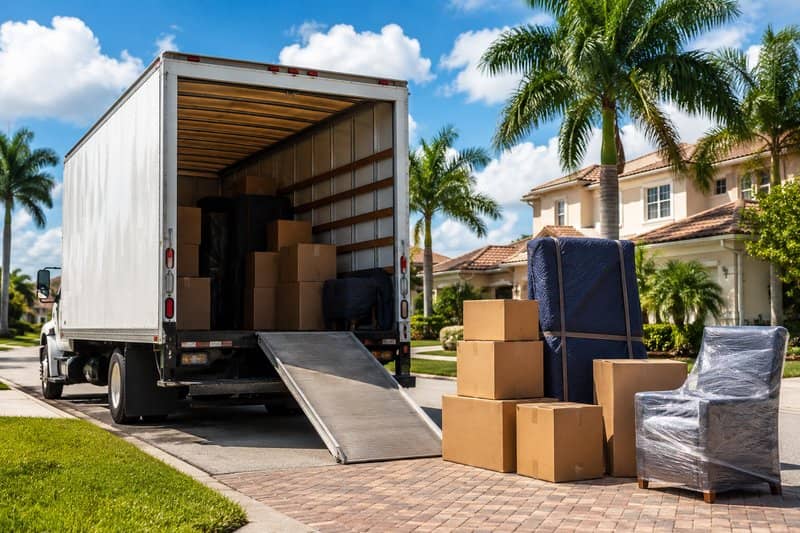
Moving from Florida to Texas is no small commitment. It requires dozens of moving parts to all work together. You can often simplify things by turning to a professional moving company.
However, things can get complicated pretty quickly when you start comparing moving quotes. If this is your first time moving long distance, you might have no idea what each quote is built on. The cost of moving from Florida to Texas depends on a handful of factors, and understanding them helps you choose the best moving company for your situation.
If you go in blind, you might pick the movers with the cheapest quote and end up paying much more by the time the last box is unpacked. But if you choose your movers with an understanding of why a quote looks the way it does, you’ll have the power to pick a team that will help make the process as smooth as possible.
Distance and Route
Distance plays a big role in moving quotes. A move from Jacksonville to Houston covers more ground than one from Pensacola to El Paso’s neighboring counties. That mileage factors directly into the total.
Route also plays a role beyond a straight-line distance. Fuel, drive time, and the logistics of a multi-day haul all grow along with the miles between your old home and your new one. That means, even when two moving trucks might weigh the same amount, one move can cost much more than the other when the routes are different.
A shipment moving from Miami to Dallas travels a totally different distance than one moving from Tallahassee to Amarillo, even though both moves start in Florida and end in Texas. The state names on either end tell you less about the total than the actual mileage between addresses.
Shipment Weight and Home Size
Weight is the other core input, and it’s the one most within your control. The more you bring, the more your move weighs, and the more it costs to transport. That’s why it’s crucial to accurately report your inventory. A quote based on a rough guess of your belongings is only as good as that guess.
Home size is a useful shorthand for weight, but it’s not a perfect one. A one-bedroom apartment packed with lots of furniture can weigh more than a two-bedroom home with minimal belongings. Walking through your home with your mover, room by room, gives you a far more accurate weight estimate than working off square footage or bedroom count.
Deciding what to bring and what to leave behind has the most direct effect on your total. Donating, selling, or discarding items you don’t plan to use in Texas is an excellent idea because it reduces your total move weight.
Weight isn’t just estimated once and left alone. Movers typically verify it using certified scales at pickup, and sometimes again at delivery. That’s what makes an accurate walk-through estimate better than a rough guess. A quote built on a careful inventory is a lot more reliable than one that comes from a quick phone call.
Time of Year
The time of year when you move affects cost as well as availability. Demand for long-distance moves isn’t flat across the calendar, and pricing tends to increase with demand. Certain months and even certain days, like weekends or the first and last few days of a month, see more requests than others.
If your move dates have any flexibility, aim to move during a less concentrated stretch of the calendar. Doing this can mean more competitive pricing and more open pickup windows. Weekdays and the middle of the month also tend to see lighter demand than weekends or the first and last few days, when leases and closings most often turn over.
Remember, it’s not so much about aiming for a certain season. Demand shifts throughout the year and even within a given month. Timing your move around that shift can work in your favor if your schedule allows it.
Access at Pickup and Delivery
Access at both ends of your move affects labor time, and labor time affects cost. A ground-floor home with a driveway close to the door is straightforward to load. But certain factors can all add a lot of time to the job:
- A third-floor walkup
- A long carry from the nearest parking spot
- A building that requires an elevator reservation
When one home has easy access and another takes several hours just to load or unload, the cost can vary greatly, even when the total weight is the same.
It’s worth walking your mover through both locations in detail: stairs, elevators, parking restrictions, and anything else that could slow down loading or unloading. Surprises on move day, like a truck that can’t get close to the building, tend to show up as add-on charges. Flagging access details at the estimate stage avoids that.
Which Services You Add
A base move covers loading, transport, and unloading. You can choose to book full-service long-distance movers, which cover much more than a basic move:
- Full packing
- Furniture disassembly
- Specialty crating for fine art or a piano
- Auto shipping
- Climate-controlled storage on either end
Choosing full-service movers adds to the total because it adds labor, materials, or handling. However, it’s often more than worth the cost because it means more convenience and less labor on your part.
A professional long-distance mover will walk you through what each one covers so you can decide what’s worth adding for your specific move. A homeowner shipping a car and using short-term storage will naturally see a different total than a renter handling their own vehicle and moving directly into a ready home, even if both shipments weigh about the same.
Valuation coverage is worth a mention here, too. Higher coverage levels typically cost more to add, but they also mean more protection for your belongings in transit. Whether that trade-off is worth it depends on what you’re moving and how replaceable it would be. That’s a conversation to have with your mover well before pickup day.
The Principle That Ties It All Together
With long-distance moves, there’s no flat rate. Distance, weight, timing, access, and added services all feed into the same weight-based principle: you pay for what you bring and the services you use.
Choosing a qualified long-distance mover can help you be more sure of your belongings staying safe and protected throughout your move from Florida to Texas. That peace of mind, along with understanding the accuracy of your quote, is worth any cost.